
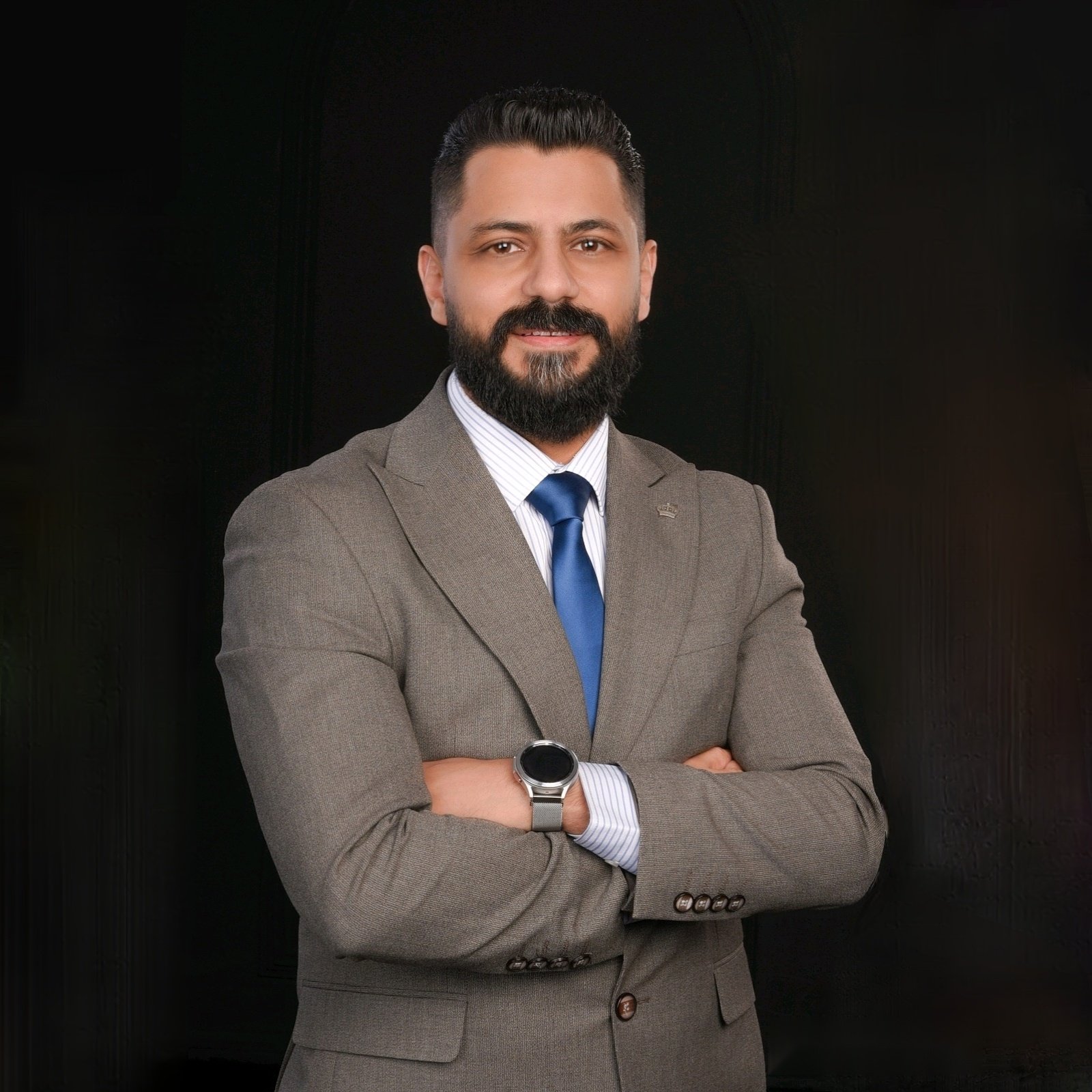

Most conversations about trade digitisation start with platforms, pilots and legal reform. Hussam AlKokhon starts on the operations floor: the document examiners, sanctions checks and LC terms that decide whether a transaction moves or stalls. He runs trade finance operations at Doha Bank and holds both the CDCS and Certified Blockchain Expert credentials, a pairing that puts him on both sides of the technology debate.
Ask him what is holding back electronic trade documents and he does not point to the law. He points to the ecosystem: corporates, carriers, freight forwarders and insurers that must all be ready before paper drops out of the process. And he points to people, and the gap between practitioners who know the rules and those who know the technology.
Hussam AlKokhon, Vice President, Trade Finance Operations, Doha Bank, spoke with Digital Trade Outlook about what has proved effective in reducing documentary credit discrepancies, what must change inside banks for MLETR to translate into live transactions, how compliance has reshaped the staffing and management of trade operations, and how Doha Bank is developing specialist capability as the role of the trade operations professional changes.
Digital Trade Outlook–Discrepancies in documentary credits remain a persistent industry challenge. What has proved most effective at reducing them, and where does technology help most?
Hussam AlKokhon, Vice President, Trade Finance Operations, Doha Bank: Discrepancies continue to be one of the biggest causes of delays, additional costs, and customer dissatisfaction in documentary credit transactions. In my experience, the most effective way to reduce discrepancies is through a combination of customer education, strong front-line engagement, and experienced document checking teams. Preventive action is always more effective than corrective action.
Technology has significantly improved this area by enabling automated document validation and rule-based checking against LC terms and conditions. Artificial intelligence and OCR technologies are increasingly helping banks identify inconsistencies sometimes even before documents reach the examination stage. However, technology should be viewed as an enabler rather than a replacement for expertise. Trade finance transactions often involve complex structures and documentation that still require professional judgment and interpretation by experienced document examiners.
MLETR adoption is progressing across jurisdictions, but legal reform alone does not put electronic documents into live transactions. From an operations standpoint, what must change inside banks for electronic records to be processed as routinely as paper?
MLETR provides the legal foundation for electronic trade documents, but legal recognition alone is not enough to drive widespread adoption. Banks have spent decades building processes around the movement, checking, and storage of paper documents, so transitioning to electronic records requires changes to systems, procedures, controls, and staff capabilities.
However, one of the biggest challenges is beyond the banks themselves. Successful digital trade requires participation across the entire trade ecosystem, including corporates, carriers, freight forwarders, insurers, and other stakeholders. If only some parties are ready to accept and process electronic documents, the benefits of digitalization become limited, and paper often remains part of the process.
Another challenge is that the economic gains are not always immediately visible to participants. While electronic records can reduce processing times, operational risks, and document handling costs, many organizations still struggle to quantify the return on investment compared to their existing paper-based processes. Greater awareness of the long-term efficiency gains, cost savings, and risk reduction benefits will be important in accelerating adoption.
Ultimately, for electronic records to become routine, they must fit seamlessly into existing trade workflows, compliance checks, archival requirements, and customer journeys. Adoption will accelerate when all parties in the trade chain can clearly see both the operational and economic value of moving away from paper.
Compliance screening, sanctions checks and vessel verification now sit within the trade operations workflow. How has this changed the way a trade operations function is staffed and managed?
Trade finance operations today are significantly more compliance-driven than they were a decade ago. Trade transactions increasingly require sanctions screening, AML reviews, vessel monitoring, trade-based money laundering controls, and enhanced due diligence activities alongside traditional operational processing.
As a result, trade operations teams must possess a wider range of skills. In addition to technical trade finance knowledge, staff must understand financial crime compliance risks, geopolitical developments, sanctions, and regulatory expectations.
From a management perspective, this has increased the need for stronger collaboration between operations, compliance, risk, and relationship management teams. It has also reinforced the importance of continuous training and specialist certifications. Modern trade operations functions are no longer simply processing centers; they are key components of a bank’s risk management framework.
You hold a Certified Blockchain Expert credential alongside CDCS, which is an unusual combination. Where has technology delivered the clearest operational gains in trade finance, and what does it take to move from pilot to production?
The greatest operational gains in trade finance have come from workflow digitalization, automation of manual controls, and improved accessibility of data. These advancements have delivered measurable improvements in processing efficiency, turnaround times, auditability, and operational risk reduction.
Blockchain technology has also demonstrated significant potential, particularly in areas such as document authenticity, data integrity, ownership transfer, and the creation of trusted trade ecosystems. In fact, many emerging solutions for electronic Bills of Lading (eBLs), trade document digitization, and trade finance tokenization are built on blockchain or distributed ledger technologies. While trade finance professionals do not necessarily need deep technical expertise, it is becoming increasingly important to understand, at a high level, how blockchain works and how it can be leveraged to streamline trade processes, enhance transparency, and strengthen trust among counterparties.
However, technology alone does not guarantee success. Moving from pilot to production requires a clear business case, stakeholder commitment, regulatory acceptance, industry participation, and seamless integration with existing banking systems. One of the key lessons from the industry’s digital transformation journey is that successful initiatives focus on solving genuine business problems rather than implementing technology for its own sake.
Many proof-of-concept initiatives fail because they struggle to achieve ecosystem-wide adoption or deliver sufficient value to participants. Sustainable adoption occurs when digital solutions provide measurable benefits to customers, banks, corporates, carriers, and other trade stakeholders while fitting naturally into existing operational and compliance processes. The real objective should not be to adopt blockchain or any other technology, but to create a more efficient, secure, and scalable trade finance ecosystem.
Trade finance operations depend on specialist expertise that takes years to build, from document examination to guarantee handling. How is Doha Bank developing this capability, and how is the role of a trade operations specialist changing?
At Doha Bank, we recognize that trade finance remains a highly specialized discipline where knowledge, experience, and professional judgment are critical to success. We invest heavily in structured training, cross-functional exposure, professional certifications, and continuous learning programs to build and retain expertise across our teams.
The role of the trade operations specialist is evolving from a predominantly transactional processor to a risk-aware, technology-enabled professional. Today’s specialists are expected to understand international trade rules, compliance requirements, digital trade solutions, and customer needs simultaneously.
One of the industry’s key challenges is the evolution of trade finance itself over the last four decades. From the 1980s to today, trade finance has become increasingly sophisticated, with continuous changes to international rules, compliance requirements, sanctions frameworks, and technology platforms. This has created a noticeable gap between generations of professionals. Many experienced practitioners possess deep expertise across the full spectrum of trade finance products and understand the underlying rules but may be less comfortable with emerging technologies and digital transformation initiatives. Conversely, newer generations of professionals are often highly technology-oriented and adaptable to digital tools but may have limited exposure to the broader trade finance landscape, having worked on only specific products or specialized functions.
As a result, the industry is facing a growing expertise and knowledge gap. Bridging this gap requires organizations to combine the strengths of both groups, leveraging the practical experience of seasoned trade finance professionals while equipping them with digital skills, and simultaneously helping newer professionals build a stronger foundation in trade finance products, rules, risks, and operational practices.
As automation increasingly takes over repetitive tasks, human expertise becomes even more valuable. The future trade operations professional will need to combine strong technical trade finance knowledge with digital literacy, analytical thinking, and risk management capabilities. Success will belong to those who can effectively bridge the worlds of trade finance expertise and technology, rather than focusing on one at the expense of the other.
How is Doha Bank using digitalization to strengthen the efficiency, security, and compliance of its trade finance operations?
Digitalization is a key enabler of Doha Bank’s trade finance strategy. We continue to enhance our operating model by introducing workflow automation, digital document management, system-driven controls, and improved management information capabilities.
From an efficiency perspective, digitalization reduces manual intervention, shortens processing times, and improves service consistency. From a security standpoint, automated controls, audit trails, and controlled access environments strengthen operational resilience and reduce operational risk.
In terms of compliance, digital solutions support more effective sanctions screening, transaction monitoring, record management, and reporting capabilities. Ultimately, our objective is to create a trade finance environment that combines operational excellence, regulatory compliance, customer convenience, and readiness for the future digital trade ecosystem.
The conversation continues
Join the discussion on LinkedIn
Hussam AlKokhon shared this interview on LinkedIn. Read what peers are saying and add your view.
Across 2 LinkedIn posts, as of 13 October 2026
- Also on the Digital Trade Outlook page3 reactions