
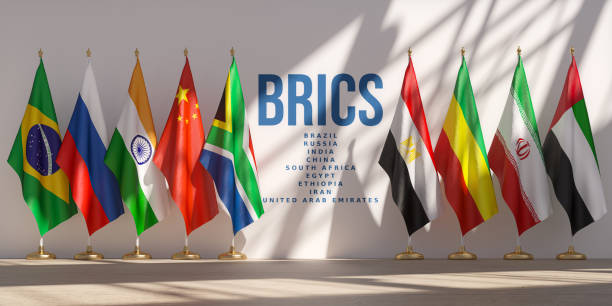
The most important thing happening inside BRICS has nothing to do with a common currency. It is the slow construction of financial plumbing that could carry a growing share of world trade outside the usual dollar channels.
The dollar itself is not going anywhere. It still dominates trade and finance, sits on top of the deepest capital markets in the world, and benefits from a global banking network built around it over decades. No BRICS currency comes close. But close may not be the point, because the countries involved are not really trying to dethrone anything. They are building options.
Governments, central banks and commercial institutions across the bloc are wiring up payment networks, local-currency settlement arrangements and digital infrastructure that give companies more ways to move money and finance trade. India has the Unified Payments Interface, one of the most advanced instant payment systems anywhere. Brazil’s Pix rewired domestic payments in a few short years and other countries have noticed. China keeps extending the Cross-Border Interbank Payment System for renminbi transactions, while Hong Kong and the United Arab Emirates deepen their roles as gateways for capital and trade.
Take each of these on its own and it looks like a national project. Put them side by side and a pattern appears. The challenge to the Western-led financial order is not a rival currency at all. It is fragmentation: a world of several currencies, several payment networks, several financial centres, several trade corridors. The contest that matters is over the infrastructure global commerce runs on.
The Battle Has Moved From Currency to Infrastructure
For years the BRICS conversation kept circling one question. Can the bloc produce a currency capable of challenging the dollar?
Wrong question. A common currency would demand a level of monetary and political coordination that economies with such different financial systems, capital controls, trade balances and strategic interests are nowhere near achieving. Connecting payment and settlement systems, on the other hand, is hard but doable.
India’s 2026 BRICS presidency has put this squarely on the table. The Reserve Bank of India has reportedly proposed exploring links between the central bank digital currencies of member states to ease cross-border trade and tourism payments. Whatever happens to that specific idea, the direction is clear enough. Interoperability. National systems talking to each other so money crosses borders faster, more directly, at lower cost.
The pieces already exist. UPI in India, Pix in Brazil, CIPS and a fast-developing digital renminbi ecosystem in China, heavy Gulf investment in payments and connectivity. What is missing is the wiring between them.
Right now a routine international transaction can still pass through several correspondent banks and a couple of currency conversions before it settles, and every intermediary adds cost and time. Connect the national systems and that model starts to erode. A company trading between two emerging markets could one day choose its settlement currency, its payment rails and its banks rather than defaulting to the dollar leg because nothing else was practical.
None of this kills the dollar. It just means fewer transactions have to touch it. As de-dollarisation goes, that version is far more realistic than a rival currency, and probably more consequential too.
Local-Currency Trade Needs More Than Political Ambition
BRICS governments keep declaring their support for trade in local currencies. Declarations are cheap. A currency becomes international when businesses can find liquidity in it, when banks can clear and settle it reliably, when companies can hedge it, when investors can hold assets denominated in it without worrying about getting stuck, and when capital moves across borders without friction.
China knows exactly how hard that is. CIPS has strengthened the rails for cross-border renminbi payments, and Hong Kong keeps deepening its position as the main offshore renminbi centre. The recent push to expand offshore renminbi liquidity and investment channels tells you what Beijing has learned: a currency does not internationalise on payment rails alone. It needs the whole ecosystem.
The same lesson applies across the bloc. UPI proved digital public infrastructure works at colossal scale. Pix changed how an entire country moves money. The UAE is building itself into a bridge between Asian, African and Middle Eastern capital. But domestic success is not the same thing as international financial weight. The next stage, the harder one, is cross-border connectivity.
If it happens, new financial corridors will form around the big trading relationships. China-Brazil trade settling more often in renminbi and real. India’s growing commerce with the Gulf running on new payment and financing arrangements. The UAE sitting at the junction of three continents’ money.
The future probably does not belong to one alternative currency. It belongs to a network of alternatives.
Trade Finance Is the Bigger Opportunity
Payments get the headlines. Trade finance is where the bigger prize sits.
Global trade still runs on expensive, fragmented plumbing. A single cross-border deal can involve several banks, a pile of documents, compliance checks, currency conversions and separate financing arrangements. A large multinational absorbs all that as a cost of doing business. A small exporter in an emerging market often cannot, and simply stays out of international trade as a result.
So consider what the BRICS infrastructure agenda could actually deliver: payment systems, digital identity, electronic trade documents, compliance infrastructure and financing platforms knitted together, so a transaction runs from purchase order through financing, shipment, documentation and settlement inside one connected digital environment. That is a trade infrastructure story, not just a payments story.
Each member is already building a piece of it. China is extending renminbi-based infrastructure along its trade relationships. India is exporting parts of its digital public infrastructure and making international connections around UPI. The UAE is growing into a serious centre for cross-border payments, trade finance and digital assets. Brazil showed how quickly modern payment rails can change financial behaviour at national scale. The New Development Bank adds a financing layer on top, through its infrastructure and sustainable development mandate.
Payments, trade finance, digital identity, e-documentation and settlement usually get treated as separate fields of innovation. They are converging into one system, and whoever connects them will have a large say in how the next generation of global trade actually works.
Which is why the BRICS story is bigger than the de-dollarisation debate suggests. The real competition is not over which currency sits at the centre of commerce. It is over who owns, operates and sets the standards for the infrastructure carrying it.
Building Around the Dollar
The obstacles are not small. BRICS members run different political systems and want different things. India and China trade heavily with each other while competing geopolitically. Some members export energy, others are among the world’s biggest importers of it. Their currencies vary enormously in liquidity, convertibility and acceptance. Agreeing common standards across payments, CBDCs, regulation, cybersecurity and data governance will take years, if it happens at all.
And the dollar’s advantages are structural, not just political. The depth of US capital markets, the sheer volume of dollar assets available, global liquidity, decades of institutional trust. None of that evaporates because a summit communiqué says so.
But here is the thing. The global financial system does not need a new dominant currency to become multipolar. It needs credible alternatives, plural. Companies settling in different currencies depending on the corridor. Banks plugged into more than one clearing network. Instant payment systems talking to each other across borders. CBDCs and tokenised deposits running alongside correspondent banking rather than replacing it. Trade finance platforms folding financing, payments, compliance and documentation into connected digital ecosystems.
The Western-led order does not collapse in that world. It acquires new layers around it.
The summits and the de-dollarisation rhetoric will keep making headlines. The actual influence of BRICS will be decided somewhere much less telegenic: in payment networks, clearing systems, trade finance platforms, digital currencies and the financial centres that link them.
So the question worth asking is no longer whether BRICS can build a currency to replace the dollar. It is whether these economies can build a financial ecosystem that gives companies and countries real alternatives for conducting trade.
If they can, the dollar will likely stay at the centre of global finance for decades. It will just find itself surrounded, by new currencies, new networks and new infrastructure.
BRICS is not replacing the dollar. It is building around it.