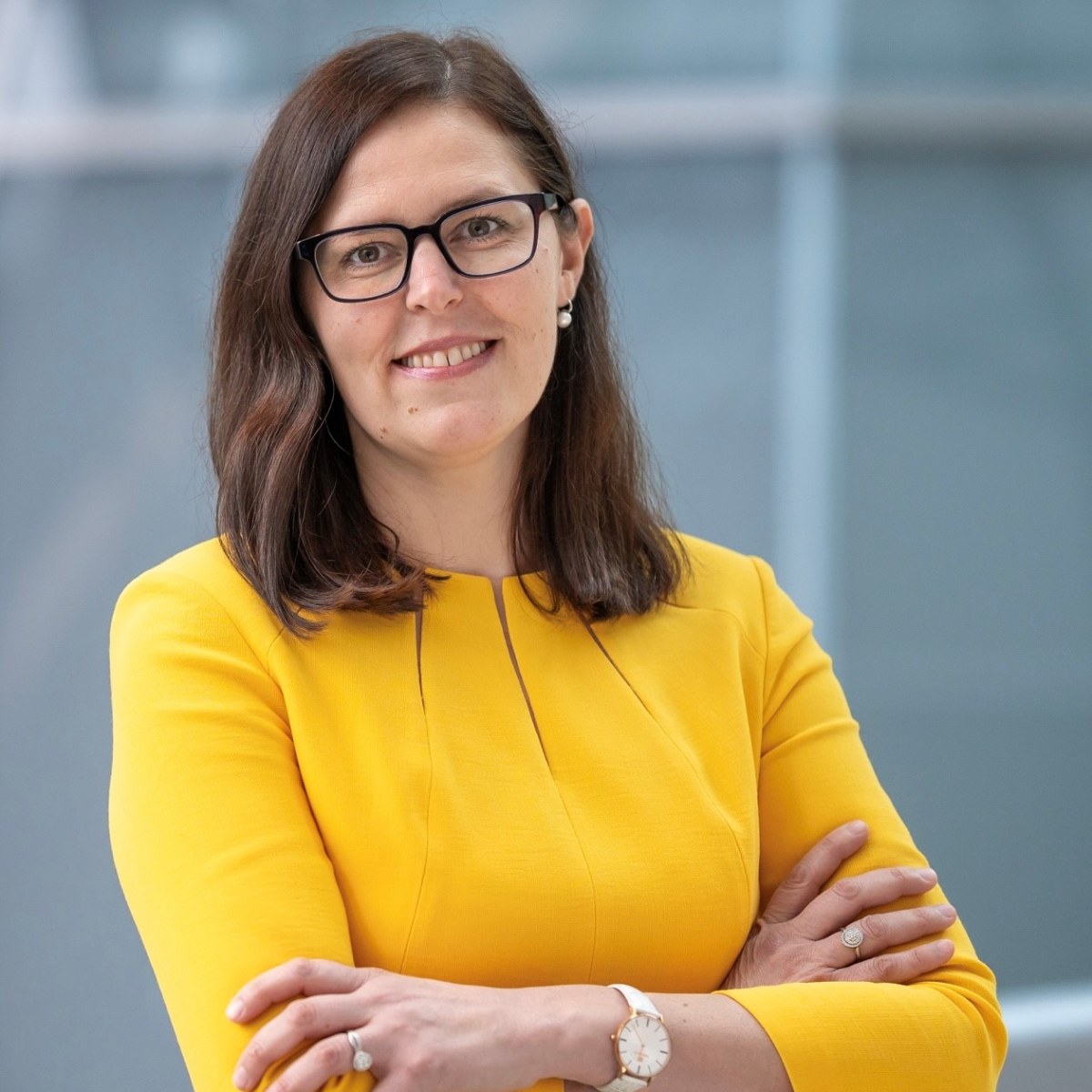

Banks have spent years debating whether tokenised deposits and new payment rails will replace correspondent banking. Tsvetanka Nankova expects a different outcome. Rather than one network winning, she sees a multi-rail environment taking shape, and she believes banks like Deutsche Bank will earn their place by orchestrating payments across it on behalf of their clients.
That view is shaped by what financial institution clients ask her team every day: what new rails can deliver that existing infrastructure cannot, how the networks will connect with each other, and how to manage liquidity once payments run around the clock.
Tsvetanka Nankova, Global Head of Sales, Institutional Cash & Trade Finance, Deutsche Bank, spoke with Digital Trade Outlook about the questions clients are asking on tokenised deposits and new payment rails, the demand for trade finance in Africa and other frontier markets, how transaction data is changing cash flow forecasting, payment routing and fraud detection, Deutsche Bank’s approach to fintech partnerships, what 24/7 payments mean for liquidity, and how the bank helps clients through geopolitical disruption.
Inside Deutsche Bank’s view of a multi-rail payments world
Digital Trade Outlook: What questions are financial institution clients asking you most often about tokenised deposits and new payment rails today?
Tsvetanka Nankova, Global Head of Sales, Institutional Cash & Trade Finance, Deutsche Bank: The questions we’re hearing centre on practical applications. Financial institutions want to understand what tokenised deposits and new payment rails can deliver that existing infrastructure cannot, particularly when it comes to 24/7 settlement and reducing friction in cross-border payments. At Deutsche Bank, we’re actively involved in initiatives exploring these questions through different approaches, whether that’s multi-bank settlement platforms such as Partior, interoperability initiatives such as Swift Ledger, or broader public-private initiatives exploring the future of tokenised money, such as Project Agorá.
Related to this is the question of interoperability. With multiple initiatives emerging, clients want to understand how these networks will connect with one another and with established correspondent banking infrastructure. Rather than any single technology or form of money replacing what exists today, we expect to see the emergence of a multi-rail environment.
For financial institutions, both the challenge and the opportunity lies in how successfully they can navigate this increasingly complex landscape and take advantage of new capabilities without having to connect to every network individually. We believe correspondent banks such as Deutsche Bank have an important role to play here, moving beyond transaction processing to orchestrating payments across different networks, infrastructures and forms of money on behalf of our clients.
Which trade corridors are seeing the most new demand for trade finance from your clients?
One of the clearest trends we’re seeing is the considerable demand for trade finance in emerging and frontier markets, particularly across Africa, where access to financing remains a significant challenge. For exporters, the opportunity to reach new customers is there, but the availability of financing and the ability to manage counterparty and country risk can be limiting factors.
This is where partnerships have an important role to play. In July, Deutsche Bank announced a €1 billion trade finance guarantee platform with the Multilateral Investment Guarantee Agency (MIGA), part of the World Bank Group, designed to expand access to trade finance in frontier and emerging markets.
The initiative forms part of a wider ecosystem of partnerships we’re building with banks, insurers, reinsurers, multilateral institutions, and investors. By bringing together complementary expertise and risk capacity we can support trade flows in markets where financing might otherwise be difficult to access.
How are clients putting transaction data to work in areas like cash flow forecasting, payment routing and fraud detection?
I think we’re seeing a shift in how financial institutions think about the value of transaction data. Historically, much of the focus has been on reporting and understanding what has already happened, and now clients are looking at how they can use that information to make better decisions and improve their operations.
Cash-flow forecasting is a good example. By analysing historical payment patterns and anticipated inflows and outflows, financial institutions can build a clearer picture of their liquidity needs, helping them make more informed decisions about when to move money and how to deploy liquidity efficiently.
Payment routing is another opportunity, particularly as the industry moves towards a multi-rail environment. Richer transaction data, combined with AI, could allow banks to make more intelligent routing decisions based on factors such as cost, speed, liquidity availability and the requirements of individual transactions.
We also see significant opportunities in fraud detection and transaction monitoring. At Deutsche Bank, for example, we’re already using AI to help identify and clear false-positive alerts, allowing our teams to focus their attention on cases that require closer investigation.
How does Deutsche Bank approach partnerships with fintechs, marketplaces and digital platforms that are driving new payment flows?
We see these newer players as both an important and growing client segment, but also potential strategic partners that bring complementary strengths to the table.
Fintechs and digital platforms, for example, are often highly agile, with innovative business models and strong customer relationships. Banks, meanwhile, bring global networks, regulated balance sheets, liquidity provision, and the expertise needed to manage risk across different markets. By working together, we can combine our respective capabilities to develop solutions that meet evolving client needs and extend our reach into new markets and payment ecosystems.
What does the move to 24/7, real-time payments mean for how financial institutions manage liquidity?
Traditionally, liquidity management has been organised around defined settlement windows, market operating hours, and payment cut-offs. As payments become available around the clock, institutions will need to manage their liquidity positions much more dynamically.
At Deutsche Bank, we’re supporting this transition at two levels. At an industry level, we’re supporting efforts to extend the operating hours of central bank payment infrastructures, including T2 in Europe. At a client level, we’re already providing solutions that offer greater flexibility today, such as EverOn, which enables USD cross-border book transfers 365 days a year, including weekends and public holidays.
There are significant opportunities here. Extended settlement hours can, for example, allow financial institutions to deploy liquidity more efficiently, reduce their reliance on precautionary buffers and respond more quickly to changing market conditions.
Of course, moving to 24/7 operations is not simply a matter of extending settlement hours. It requires changes to liquidity risk management, stress testing and regulatory reporting, alongside greater coordination around value dates, interest accruals and cut-off times. Banks will also need to ensure their technology and operational capabilities can support continuous processing. This is where a more coordinated, industry-wide approach is still needed.
How is Deutsche Bank helping clients manage the impact of geopolitical disruption on their payments and trade flows?
Our role is to help clients adapt as global trade and payment flows change. This includes providing access to different currencies and payment infrastructures, helping clients navigate changing regulatory and sanctions requirements and maintain reliable cross-border connectivity. Strategic partnerships are also becoming an even more important part of the equation, as they allow us to share risk and extend our reach, helping our clients access trade finance in new or more challenging markets.
Alongside the capabilities that enable clients to do business across borders, we also provide extensive advisory support. With geopolitical developments reshaping trade corridors and creating new risks and uncertainties, financial institutions need a clear understanding of how these changes affect their businesses and how best to respond. Drawing on our global network, local market expertise and risk management capabilities, we proactively help clients meet these challenges and identify new opportunities for their end customers.
Read more conversations with transaction banking leaders in our Executive Voice series.
The conversation continues
Join the discussion on LinkedIn
Digital Trade Outlook shared this interview with Tsvetanka Nankova on LinkedIn. Read what peers are saying and add your view.
On the DTO LinkedIn post, as of 17 November 2026