
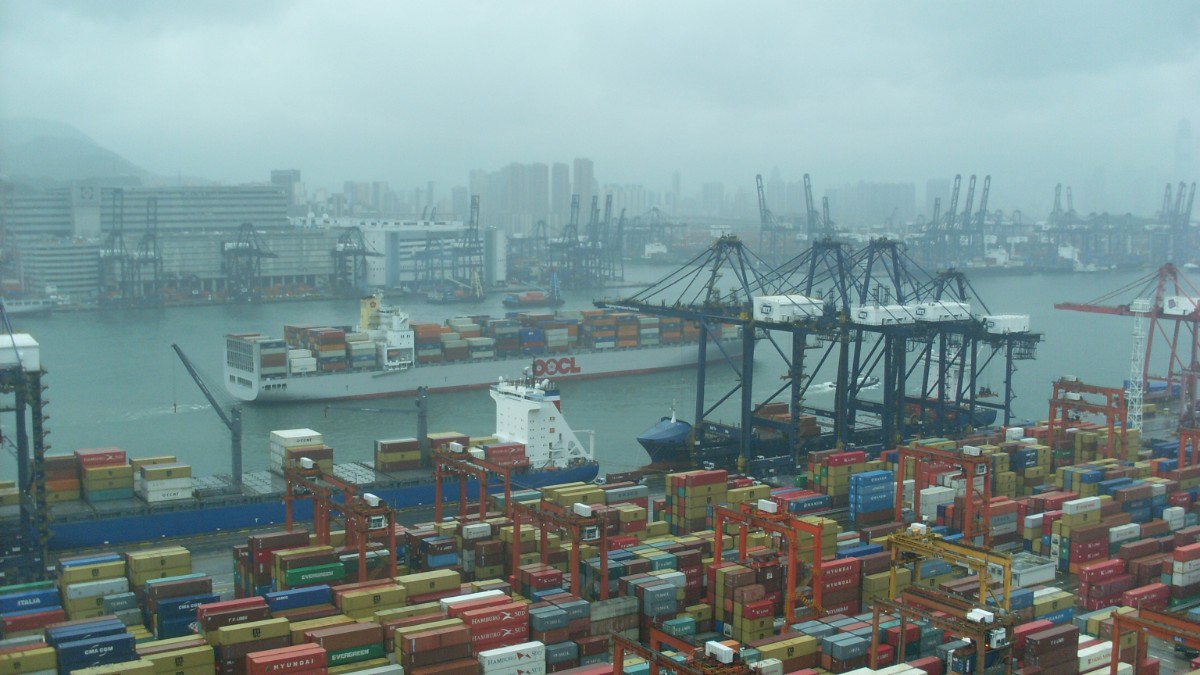
Hong Kong FinTech Week opens on 2 November. Among the city’s trade finance projects, one has started to produce loans. On 5 October, the Hong Kong Monetary Authority (HKMA) said five banks can now use trade declaration data from the Yangtze River Delta through Cargox Connect, a link between its Commercial Data Interchange (CDI) and a digital trade platform developed by the Shanghai Data Bureau. To date, the link has enabled the approval of 10 trade finance loans worth HK$180 million.
The HKMA calls the five banks its first pilot cohort. Bank of China (Hong Kong), HSBC and Standard Chartered Bank (Hong Kong) are the city’s three note issuing banks. Hang Seng Bank is part of the HSBC group, and ICBC (Asia) is the Hong Kong arm of ICBC. Who joins the second cohort, and what controls come with it, will decide whether the project widens access to trade finance or mainly cuts costs for the banks that already lead.
At a Glance
- CDI connects 17 data sources with 28 banks. Five of them can use the mainland declaration data.
- Cargox Connect has enabled 10 loans worth HK$180 million, an average of HK$18 million each.
- The HKMA puts Hong Kong’s 2024 trade finance gap at HK$311.2 billion to HK$519.1 billion.
- The 12 banks with the largest trade finance books hold 80% of Hong Kong’s trade finance loans.
- The HKMA’s own Cargox report recommends evaluating a registry against duplicate financing. None has been announced.
What Changed in October
The HKMA says banks use the mainland records to verify trades and to carry out due diligence on counterparties, which it says has brought faster loan drawdowns for businesses in both onshore and offshore trade. Offshore trade is where this matters most. In those deals the goods never pass through Hong Kong, and the HKMA’s January Cargox report lists the difficulty of verifying such trades as a source of fraud risk for banks.
Data moves only with the business’s explicit consent, and CDI does not store it. The HKMA plans to extend the model to other mainland provinces and cities. It also signed a memorandum with the PAA Digital Trade Alliance, whose members include trade single window operators from 15 economies, ASEAN states among them.
Private lenders are moving too. On 21 October, Ping An Digital Bank launched Receivables Finance, which lets exporters draw against outstanding sales by submitting invoices and bills of lading, and Invoice Financing, which pays an importer’s supplier directly with repayment over three to six months. Both run on alternative data, come as revolving facilities of up to HK$50 million, and can release funds in as little as one business day. The bank’s existing Trade-Connect Loan goes further. It is an unsecured loan for eligible SME customers of Tradelink that uses customs declarations and trade data instead of financial statements, and asks for no documents at the credit stage.
The Numbers in Proportion
HK$180 million is about US$23 million at the HKMA’s HK$7.80 rate. Against the HKMA’s estimate of the city’s trade finance gap, it is less than 0.1%. An average of HK$18 million per loan shows that the link works. It does not yet show the link reaching the smaller traders the policy is aimed at.
The HKMA says banks that use alternative data through CDI more actively charge interest rates 36 basis points lower on average. That is a correlation. Banks that lean on such data may also have stronger borrowers or price differently for other reasons, and the HKMA has not published a causal analysis.
The decline the project is meant to reverse is real. The Cargox report found that banks’ trade finance loans fell 11.5% between 2021 and 2024, while Hong Kong’s merchandise trade fell only 2.7%. It attributes the gap to the shift towards open account trading, the growth of lenders outside the banking system and the interest rate environment. Trade has since recovered: exports reached HK$667 billion in August, 53% higher than a year earlier, and exports to ASEAN rose 47.8% in the first half.
What the Data Covers, and What It Leaves Out
A trade declaration helps a bank confirm that goods moved. It does not tell the bank whether another lender has already financed the same shipment. The Cargox report names duplicate financing as a fraud risk, notes that Singapore runs a dedicated Trade Finance Registry to prevent it, and among its 20 recommendations lists evaluating the costs and benefits of a registry for Hong Kong. The October announcements do not mention one.
India has moved on the same problem. In August, the Small Industries Development Bank of India (SIDBI) put MonetaGo’s Secure Financing system live on GST Sahay, its invoice financing platform, after a pilot and live production that began in March. The system validates invoices across factoring platforms and lenders, including SBI Global Factors and India Factoring.
There is also a gap closer to home. As of the 5 October speech, the HKMA was still working to connect CDI to Hong Kong’s own Trade Single Window and Port Community System. The Cargox report says CDI access to Hong Kong import and export declarations depends on Phase 3 of the Trade Single Window, due in 2027.
Who Gets Access
Of the 28 banks connected to CDI, five can use the Shanghai data. The Cargox report says only a small proportion of banks serve the SME market, and that the 12 largest trade finance lenders hold 80% of loans. A first cohort drawn from the largest banks is reasonable for a pilot. It widens access only if later cohorts include the lenders that serve smaller traders.
India shows the scale that data shared with consent can reach. Sahamati, the industry body for India’s Account Aggregator framework, says the system supported loans worth ₹3.82 trillion across 36.8 million loans in FY26, or 8.4% of India’s retail and MSME lending by value and 11.8% by number. That is not trade finance, but it shows how far shared data can travel once lenders adopt it widely.
What Remains Unsettled
Ownership. The Cargox report itself lists clear rules on data ownership, usage and confidentiality as unresolved issues for several of its recommendations.
Privacy. The report says cybersecurity and data privacy were not its primary focus.
Errors. None of the October announcements explains how a borrower can see the data a bank used, or correct a record that is wrong.
Consent. Consent covers the act of sharing. It does not cover how a bank weighs the data once it has it.
What to Watch
Four things will show whether Cargox moves from pilot to infrastructure: which banks join the second cohort of Cargox Connect, whether loan sizes fall towards SME levels, whether the registry recommendation turns into a decision, and whether Hong Kong’s own declaration data reaches CDI on the 2027 timetable.
The Pilot Works. Access Is the Unfinished Part
Hong Kong has shown that mainland customs data can support trade loans at its largest banks. Its own planning document already identifies what is missing: a defence against duplicate financing, wider bank access, and rules on data ownership. The project’s value will depend on how quickly those gaps close, more than on how many loans the first five banks approve.
Related on Digital Trade Outlook
- NBB Signs Up First for Bahrain’s Trade Finance Registry, a Shared Check Against Double Financing
- What Is MLETR? The UN Model Law Making Electronic Trade Documents Legally Valid
- ASEAN’s DEFA Moves Digital Trade Rulemaking Beyond the WTO
Image: Modlem, CC BY-SA 3.0, via Wikimedia Commons (resized)