
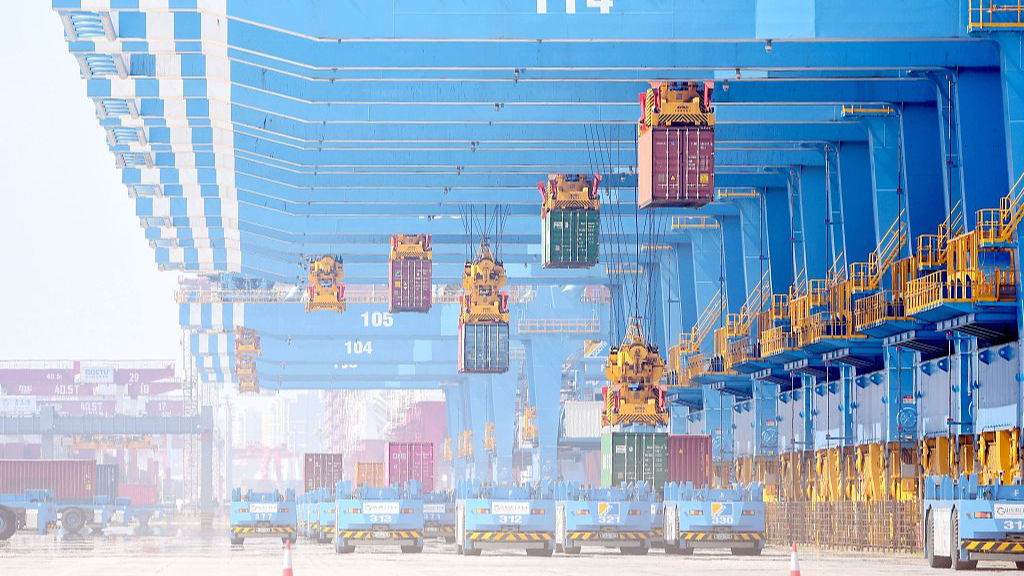
Ports across Asia are rapidly adopting automation as global supply chains adjust to shifting trade routes and rising cargo volumes. From China’s highly automated container hubs to India’s new-generation terminals, the region is emerging as the global leader in smart port operations. Analysts expect the automated terminal market to cross $20 billion by the mid-2030s, driven largely by investments in Asia.
Asia-Pacific at the Center of Port Automation
Asia-Pacific already accounts for roughly 40% of the global automated container terminal market, thanks to the scale of Chinese ports and growing infrastructure investments in India and Southeast Asia. As manufacturers diversify production under “China+One” strategies, container traffic within Asia has increased sharply, pushing ports to adopt automation to handle higher volumes efficiently.
China remains the frontrunner. The country now operates more than 50 fully or partially automated terminals, making it the world’s largest ecosystem of automated port infrastructure.
China’s Smart Port Innovations
One of the latest developments came at Qingdao Port, operated by Shandong Port Group, which introduced China’s first vacuum-based automated mooring system in January 2026.The system can secure large container ships in about 30 seconds, compared with the traditional process that can take up to half an hour.
Combined with artificial intelligence-based berth planning, remote-controlled cranes, and autonomous guided vehicles (AGVs), the system has significantly improved efficiency. Port authorities say inspection times for export cargo have been reduced and operating costs per container have fallen.
Further south, Shanghai’s Yangshan Deep Water Port continues to demonstrate the scale automation can achieve. The facility handled 28.7 million TEUs in 2025, supported by fleets of automated cranes and AGVs that move containers across the terminal with minimal human intervention.
India Steps Into Automated Port Operations
India is also moving quickly toward automated logistics infrastructure. On 14 March 2026, Prime Minister Narendra Modi commissioned the Haldia Bulk Terminal, developed by Adani Ports and Special Economic Zone (APSEZ).
Located at the Haldia Dock Complex in West Bengal, the terminal has a capacity of 4 million tonnes per year and features end-to-end mechanised cargo handling systems and direct rail evacuation. The project is expected to improve logistics efficiency for industries in eastern India, including those in West Bengal, Odisha, and Jharkhand.
Automation Delivering Measurable Gains
Port automation: What It Means
The shift toward automation is delivering clear benefits for port operators and shipping companies:
Higher productivity: Automated cranes can handle up to 50–58 container moves per hour, compared with around 25–35 at traditional terminals.
Lower operating costs: Automation reduces labour-intensive processes and can cut operating costs significantly.
Faster vessel turnaround: Ships spend less time waiting at ports, helping improve schedule reliability for global shipping lines.
Lower emissions: Electric vehicles and optimized energy systems help ports meet sustainability targets.
Market Growth Ahead
Industry forecasts suggest the automated container terminal market could grow from around $12–14 billion in the mid-2020s to about $20 billion by 2035. The broader port automation ecosystem—which includes software platforms, AI-driven logistics tools and robotics—could grow even faster.
India is expected to be one of the fastest-growing markets as port operators expand capacity and adopt digital systems to handle rising cargo volumes.
Asia Setting the Pace
With increasing trade flows within Asia and the arrival of larger cargo vessels, ports across the region are investing in technologies such as AI logistics platforms, 5G-enabled crane operations, digital twins, and hybrid autonomous fleets.
Ports in Southeast Asia—including those in Vietnam, Malaysia, and Thailand—are already studying automation models developed in China and India as they expand their own infrastructure.
For shipping lines, logistics companies, and terminal investors, the message is clear: automation is becoming essential for staying competitive. And right now, Asia is leading the transformation of global port operations.
Related on Digital Trade Outlook
- India and Indonesia to Link UPI and QRIS in Cross-Border Payment Push
- Europe and Asia Accelerate Green Port Investments as Shipping Faces Climate and Cost Pressures
- Maersk Opens Automated Logistics Hub in Singapore to Expand Asia Pacific Distribution Capacity