
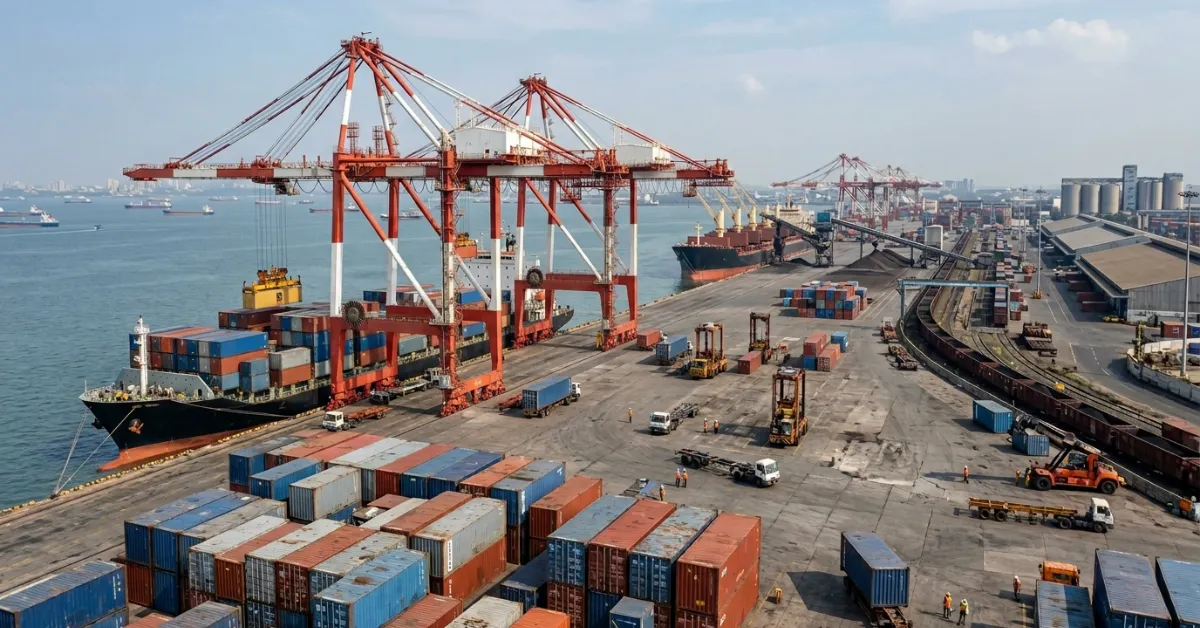
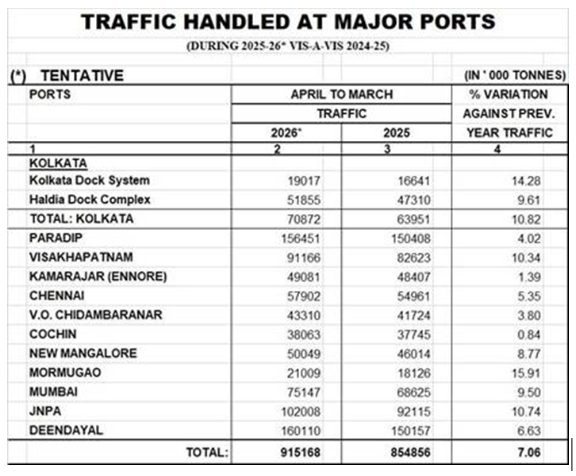
New Delhi, India — April 5, 2026 — India’s major ports handled a combined 915.17 million tonnes of cargo in the financial year 2025–26, exceeding the government’s target of 904 million tonnes. The figure represents a 7.06% increase year-on-year, signalling continued momentum in the country’s maritime and trade infrastructure.
The performance comes amid ongoing efforts to expand port capacity, improve logistics efficiency, and strengthen India’s position in global trade flows, according to an official government release.
Port Performance and Growth Trends
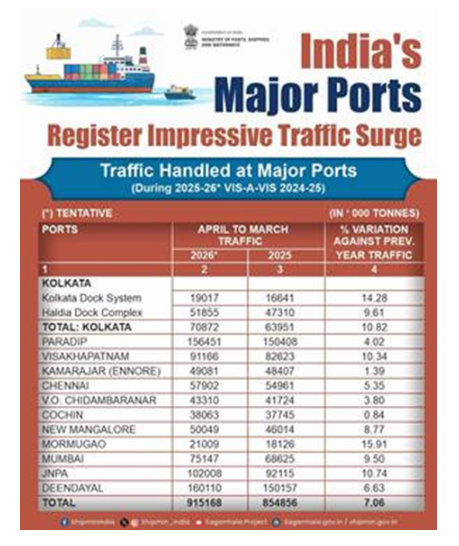
Among individual ports, Deendayal Port Authority led cargo handling with 160.11 million tonnes, followed by Paradip Port Authority at 156.45 million tonnes and Jawaharlal Nehru Port Authority (JNPA) at 102.01 million tonnes. Other major ports, including Visakhapatnam, Mumbai, Chennai and New Mangalore, also contributed significantly to overall volumes.
In terms of growth rates, Mormugao Port recorded the fastest expansion at 15.91%, followed by Kolkata Dock System at 14.28% and JNPA at 10.74%. The data points to rising cargo throughput alongside operational improvements across multiple locations.
The increase in volumes was supported by higher handling of key commodities such as coal, crude oil, containers, fertilisers and petroleum products, alongside improved turnaround times and port efficiency measures.
Infrastructure, Connectivity and Digital Push
The growth reflects a combination of infrastructure upgrades, better hinterland connectivity, and the adoption of digital systems across port operations. Authorities have also focused on multimodal logistics integration to streamline cargo movement between ports and inland markets.
India’s maritime strategy continues to prioritise port-led development, with ongoing investments aimed at expanding capacity and improving supply chain reliability. The government has tied these efforts to its longer-term Maritime Amrit Kaal Vision 2047 roadmap.
The numbers also suggest a broader shift: ports are becoming central to India’s trade competitiveness, not just transit points. Efficiency gains at ports increasingly translate into lower logistics costs and faster trade cycles.
Digital Trade Outlook Analysis
Rising port throughput signals stronger alignment between physical infrastructure and digital trade systems, particularly as ports adopt smart and automated processes. Improved efficiency at ports directly supports trade finance flows and supply chain reliability. As India scales multimodal logistics and digital port ecosystems, it strengthens its role in global trade corridors.
Source: Ministry of Ports, Shipping and Waterways.