
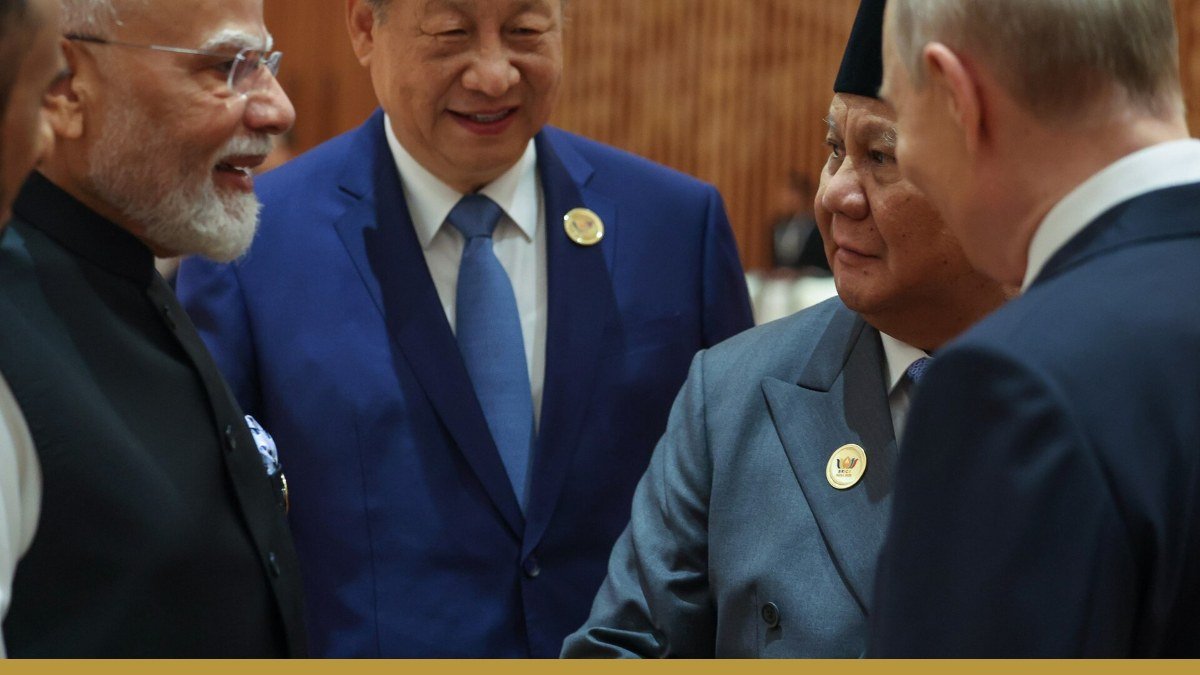
BRICS leaders met in New Delhi in September and adopted a declaration that backs trade settlement in local currencies. On payments, it encourages the BRICS Payment Task Force to continue its work, which includes studying how payment and messaging channels can connect across borders. It also says talks on local currency settlement should respect national priorities, with no single approach imposed on every member.
On 30 September, the IMF reported that the dollar’s share of global foreign exchange reserves fell to 56.70% in the second quarter, from 57.18% in the first.
Two Measures, Two Stories
The two items look like parts of one story, but they measure different things and they do not point in the same direction.
The IMF figures describe what central banks hold. The euro’s share rose to 20.6% from 20.04%, which the IMF puts mostly down to active purchasing. The renminbi’s share edged up to 2.11%. Exchange rate changes were limited in the quarter, so the IMF reads the shifts as mostly reflecting other price changes or portfolio reallocations.
The Bank for International Settlements (BIS), on the other hand, measures which currencies are actually traded. Its April 2025 survey found the dollar on one side of 89.2% of all foreign exchange trades, up from 88.4% in 2022.
Reserves show where governments park their savings, while trading shows which currencies banks and companies actually use to pay and get paid. The BIS survey dates from April 2025, so the two sets of figures do not cover the same period. Even so, on that second measure the dollar’s position strengthened between 2022 and 2025.
What the Declaration Actually Asks For
The declaration is more modest than many headlines suggest. Its payments paragraph covers work on connecting members’ payment and messaging systems across borders, along with talks on trading in local currencies. It encourages the task force to keep going and aims for solutions that are fast, low cost, accessible, efficient, transparent and safe. It makes no claim about creating a new currency.
Two other paragraphs fill in the picture. The declaration encourages the New Development Bank to expand financing in local currencies. It also condemns unilateral economic sanctions and secondary sanctions.
Why Routing Around the Dollar Is Harder Than It Sounds
Settling a trade in two local currencies sounds simple. In reality, someone has to be willing to hold the other side. An exporter paid in a currency it cannot easily spend ends up carrying that currency, and the risk that comes with it.
The BIS data show how far today’s markets are from solving that. The ten most traded currency pairs all involve the dollar, which the BIS calls the world’s vehicle currency. The renminbi’s rise shows the same pattern. Its share of trading reached 8.5%, but the dollar and renminbi pair alone made up 8.1% of global turnover. In other words, nearly all renminbi trading still happens against the dollar.
Where Trade Finance Comes In
The declaration also reaches into trade finance. It welcomes a study of an invoice discounting mechanism for BRICS members, meant to help small and medium exporters unlock working capital.
It also welcomes principles for assessing the credit of small exporters using a wider range of data. On trade documents, it aims to build cooperation on digitising documentation so that firms can work in a more efficient and transparent environment.
None of these items is a finished product. They are studies, but they point at the same place as the payments work: the gap between a trade being agreed and the exporter actually being paid. Closing that gap in a currency other than the dollar needs financing, credit assessment and clean documents as much as it needs a payment rail. This is also where banks and platforms have the most to offer.
Questions Worth Asking
The first is who provides the liquidity. A local currency channel is only as useful as the market behind it, and thin markets mean wide spreads for whoever has to convert. Someone has to quote prices in these pairs, and that someone will want to be paid for the risk.
The second is who benefits first. Large exporters with treasury teams can hedge and negotiate. Smaller ones cannot, and they may be the last to see any gain, even though the declaration speaks about helping them.
The third is whether avoiding the dollar actually reduces sanctions exposure for the banks involved, or only changes where that exposure sits. The declaration opposes secondary sanctions, but it does not remove them. That is a question and not a finding, and it is one the banks in these channels will have to answer for themselves.
For banks and companies, the takeaway is simple. The dollar is losing a little ground at the edges but holding firm at the centre. Governments are slowly spreading their reserves and backing new payment channels, yet most currency trading still runs through the dollar. What matters now is whether those new channels can build enough liquidity and trust to handle real volume.
Declarations Are Fast, Liquidity Is Slow
Governments can announce in a day what markets take years to build. A declaration can back local currency settlement overnight, but liquidity, hedging and trust cannot be decreed. If the BRICS payment work gains traction, the winners will be the banks and platforms that can connect different systems and keep a clear record of each settlement, because that is the bridge exporters will rely on.
Related on Digital Trade Outlook
- BRICS Is Not Replacing the Dollar. It Is Building Around It.
- Local Currency Settlement: The Real Story Behind De-Dollarisation
- China Moves Toward Commercial Launch of mBridge Cross-Border Payments Platform
Image: Prime Minister’s Office, Government of India (GODL-India)