
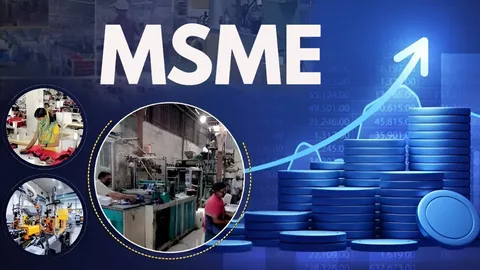
India’s Trade Receivables Discounting System (TReDS) platforms are working to widen the capital available for MSME financing as invoice financing volumes keep climbing. RXIL is considering bringing insurance companies and mutual funds onto its platform as secondary investors, letting existing financiers sell off part of the risk they take on when financing MSME invoices.
“We have 70-80 banks and other financiers onboarded onto the platform. Now we are saying, can insurance companies come on the platform? Can mutual fund companies come on the platform?” said Ketan Gaikwad, Managing Director and CEO of RXIL.
Under the proposed model, the financier stays on as the primary investor but can later sell that exposure to secondary investors. That creates more liquidity and lets financiers recycle capital into fresh transactions instead of holding it on their books.
RXIL’s annual financing volume has grown from Rs 2,300 crore in 2019 to Rs 1.09 trillion in 2025, and the platform now processes roughly Rs 13,000 to 14,000 crore in transactions every month.
Gaikwad also pointed to a secondary market for TReDS receivables as the next step. The Union Budget 2026-27 proposal to treat TReDS receivables as asset backed securities could open the door to a wider class of institutional investors, freeing up capital for financiers to put back into MSME financing. As TReDS adoption grows, including the mandate for central PSUs to pay MSME suppliers through TReDS platforms, this shift could further strengthen the financing ecosystem for small businesses.
Digital Trade Outlook: Bringing insurers and mutual funds in as secondary investors would mark a real structural shift for TReDS, moving it from a bank dominated model to one that draws on India’s broader institutional capital pool. If the asset backed securities classification goes through, it could unlock the secondary market liquidity that lets financiers recycle capital faster, which is often the real bottleneck limiting how much MSME financing a platform can support