
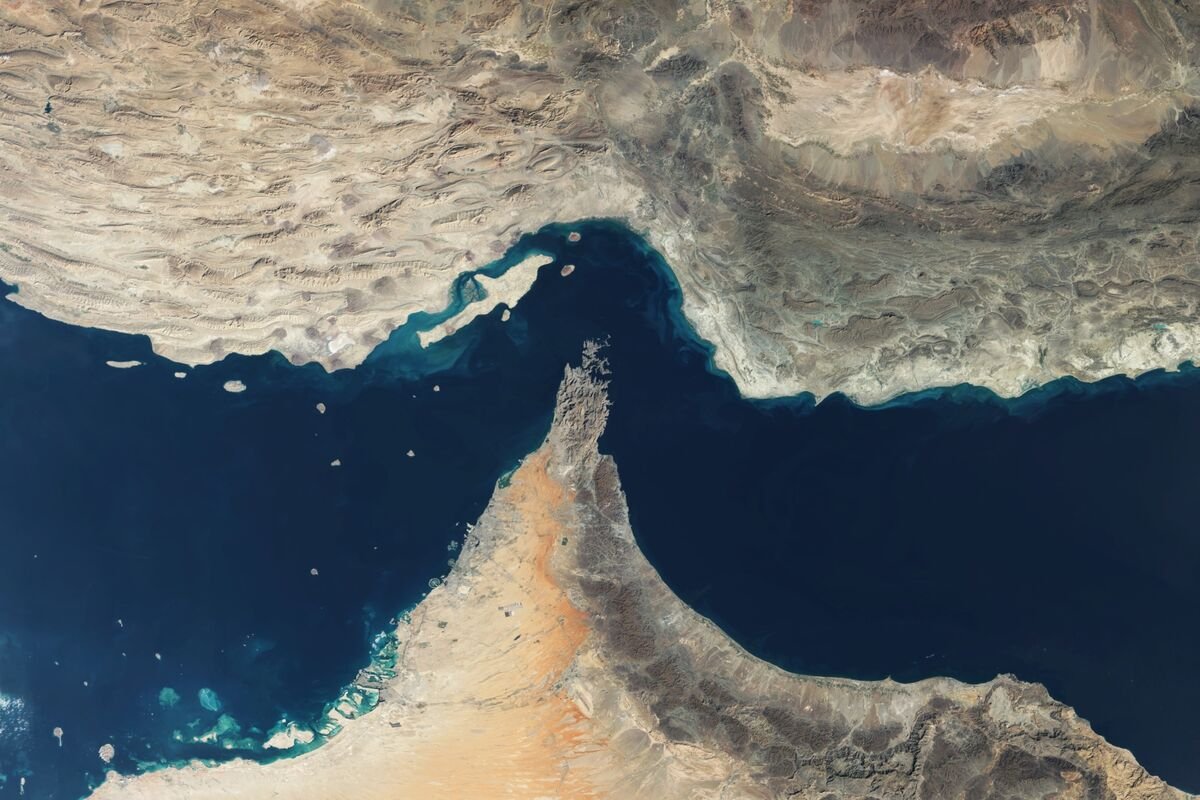
Iran is stepping up efforts to formalise transit fees for vessels passing through the Strait of Hormuz, as disruptions to one of the world’s most critical shipping corridors intensify and oil prices continue to climb. This is already beginning to ripple across global trade and energy markets, with traders and shipping operators bracing for a more prolonged and uncertain disruption.
Tehran is advancing legislation that would introduce structured charges on commercial vessels transiting the strait. The proposal is being positioned as an assertion of sovereignty and operational control, with discussions underway in parliament and a decision expected in the coming days.
In practice, elements of this system already appear to be in place. The Islamic Revolutionary Guard Corps IRGC is requiring ships to submit detailed documentation, including cargo manifests, crew lists, IMO numbers, and destinations, before being cleared to pass. Shipping reports indicate that vessels are now following designated routes approved by Iranian authorities, with some operators reportedly paying fees of up to $2 million per transit. In practical terms, passage through the strait is no longer routine but increasingly shaped by real time approvals and shifting conditions.
Traffic through the strait has fallen sharply, with volumes down by more than 90% from typical levels of around 100 to 150 daily transits. In late March, several vessels were turned back near Larak Island, highlighting the tightening control over the waterway.
Energy markets under strain
The Strait of Hormuz handles roughly 20 million barrels per day of crude oil and petroleum products, accounting for about one fifth of global supply, along with significant volumes of liquefied natural gas.
Oil markets are already reacting. Brent crude has climbed above $110 per barrel amid growing concerns over prolonged supply disruptions. At the same time, global LNG supply has tightened after damage to Qatar’s Ras Laffan facility led to force majeure declarations on several long term contracts.
Limited alternatives for exporters
Efforts to bypass the strait are underway, but capacity remains limited. Saudi Arabia’s East West pipeline and the UAE’s Habshan Fujairah pipeline are operating near full capacity, together covering only a portion of the volumes that typically pass through Hormuz.
This leaves major exporters such as Iraq, Kuwait, and Qatar with few viable alternatives, reinforcing the strategic importance of the corridor.
Growing geopolitical and maritime risk
International pressure is increasing, with multiple countries calling for the restoration of freedom of navigation. Discussions are also underway around the creation of a multinational maritime security framework to protect shipping in the region.
Iran has stated that the strait remains open to non hostile vessels that coordinate with its authorities, while selective arrangements are emerging to allow passage for certain flagged ships.
For shipping companies, operating through the strait is becoming less predictable, with requirements and risks evolving almost day by day. War risk premiums, insurance costs, and compliance requirements are all expected to rise, adding further strain to global shipping operations.
Trade and supply chain implications
Beyond energy markets, the disruption is already feeding into broader trade pressures. Higher fuel costs and reduced shipping capacity are impacting sectors such as petrochemicals, fertilisers, manufacturing, and logistics.
For trade finance, the implications are significant. Increased geopolitical risk and route uncertainty are likely to push up the cost of letters of credit, tighten compliance checks, and elevate counterparty risk across cross border transactions. For banks and trade finance providers, this means higher risk premiums, tighter scrutiny, and a more cautious approach to cross border exposure.
Businesses are increasingly being forced to reassess their strategies, including diversifying sourcing, building inventory buffers, and investing in more resilient logistics networks.
Outlook
The situation remains fluid, with markets closely watching developments in the coming weeks. If restrictions persist, the disruption could extend beyond short term volatility and begin to reshape global trade flows more structurally.
What began as a geopolitical flashpoint is now starting to alter the day to day mechanics of global trade.More broadly, the crisis highlights a persistent vulnerability in the global economy. Heavy reliance on a small number of strategic maritime chokepoints means that disruptions of this scale can quickly cascade across energy markets, trade flows, and supply chains.