
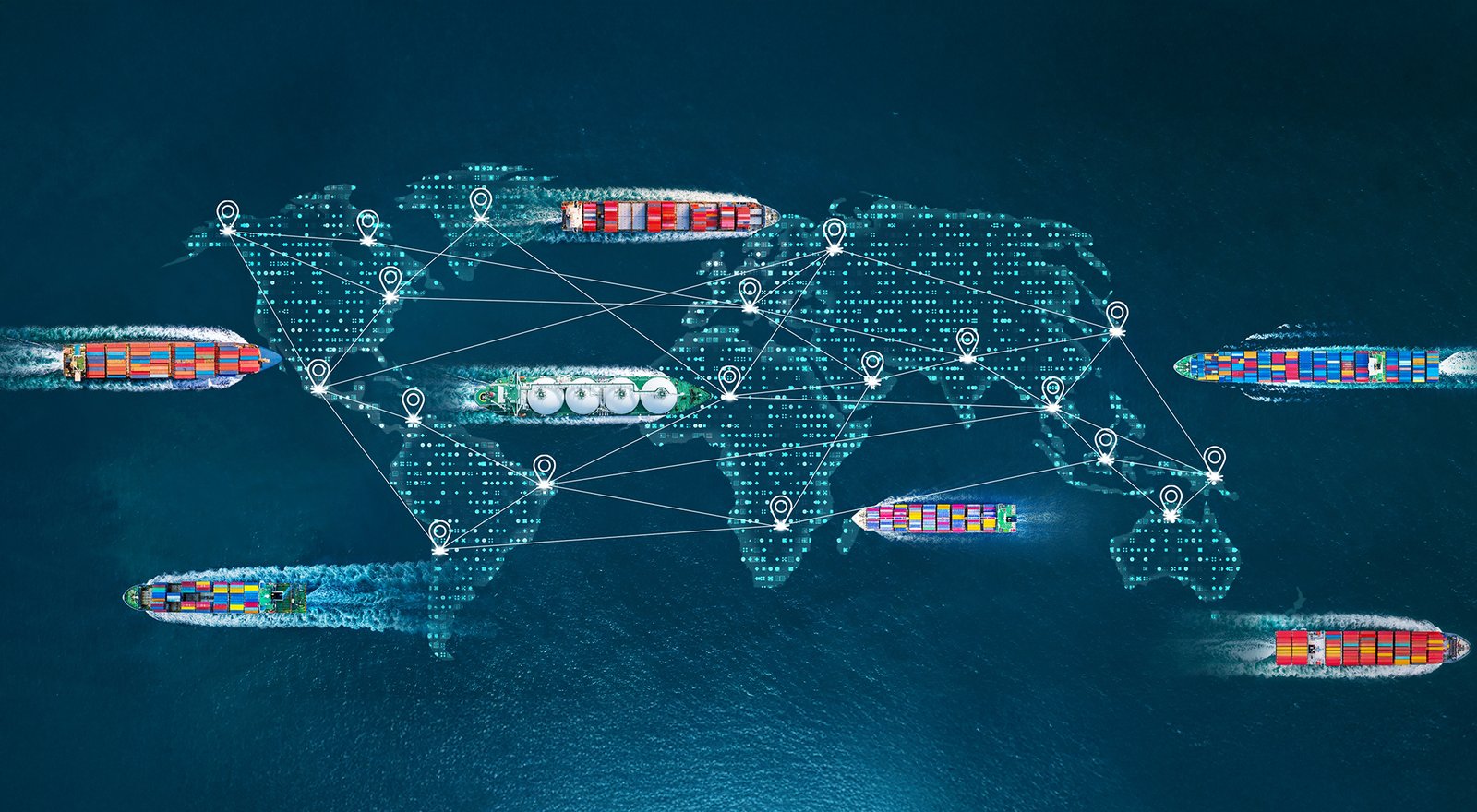
The April 7 ceasefire shows how quickly markets react to calm and how sharply they respond to uncertainty..
Just hours after the April 7 ceasefire between the United States and Iran, global markets did what they always do when risk eases. They calmed down. Not dramatically. Not decisively. But enough to signal a shift.
Because for all the talk of geopolitics and strategy, the global economy runs on something far simpler. Stability.
Nearly one fifth of the world’s oil and LNG flows through the Strait of Hormuz. When tensions escalated in late March and that flow was threatened, markets did not wait for clarity. Oil prices jumped. Shipping became uncertain. Costs began rising across the board.
That is how markets work. They price risk before outcomes.
And the effects move quickly. Higher energy costs feed into transport, manufacturing and food. Supply chains stretch. Delivery timelines slip. Margins tighten. What begins as geopolitical tension quickly turns into operational pressure for businesses.
And eventually, it reaches households.
This is what makes stability so critical. It is not a political ideal. It is a practical requirement for the global economy to function.
Now, just hours into the ceasefire, the first signs of relief are visible. Oil prices have softened. There is cautious expectation that shipping will resume. Sentiment has shifted slightly, but noticeably.
Markets reward stability just as quickly as they punish uncertainty.
Trade does not depend only on infrastructure or policy. It depends on predictability. Remove that, and everything slows.
And when it slows, the impact is immediate. Fuel becomes expensive. Food follows. Everyday costs rise in ways that are not always visible in headlines, but are felt quickly.
If disruptions persist, the effects deepen. Businesses delay hiring. Investment is pushed back. Growth softens, not overnight, but steadily.
This is where the economic story becomes a human one.
Conflict does not just disrupt trade routes. It strains systems people rely on every day. Supply chains weaken. Access to goods becomes uneven. Services slow down. A ceasefire, even a temporary one, creates breathing space. And sometimes, that breathing space is enough to stabilise the system.
Over time, the consequences run deeper. Disruptions to education and productivity do not show up immediately, but they shape long term economic outcomes in ways that are difficult to reverse.
And beneath all of this is a more persistent cost. Uncertainty.
Uncertainty delays decisions. It weakens confidence. It makes even strong economies cautious.
The recent escalation was already pushing the global economy in that direction. The ceasefire has, at least for now, interrupted that drift.
That matters.
Not because the crisis is over. It is not. But because it shows how quickly conditions can begin to stabilise when tensions ease. Trade flows start to normalise. Markets regain footing. Businesses recover some visibility.
Even if only temporarily.
For companies, investors and policymakers, the takeaway is clear. Peace is not just a moral idea in economic terms. It is a functional requirement. Supply chains depend on it. Markets rely on it. Investment follows it.
But beyond that, there is a more basic truth.
Stability allows systems to function. And when systems function, people can plan. Run businesses. Go to work. Send children to school. Access healthcare.
Take that away, and everything becomes uncertain.
This ceasefire is not a solution. It is a pause.
What happens next will determine whether this moment becomes a turning point or just a brief interruption. But even in its limited form, it has already made one thing clear.
Markets do not respond to power alone. They respond to stability.
And without it, they do not just slow down. They begin to break.