
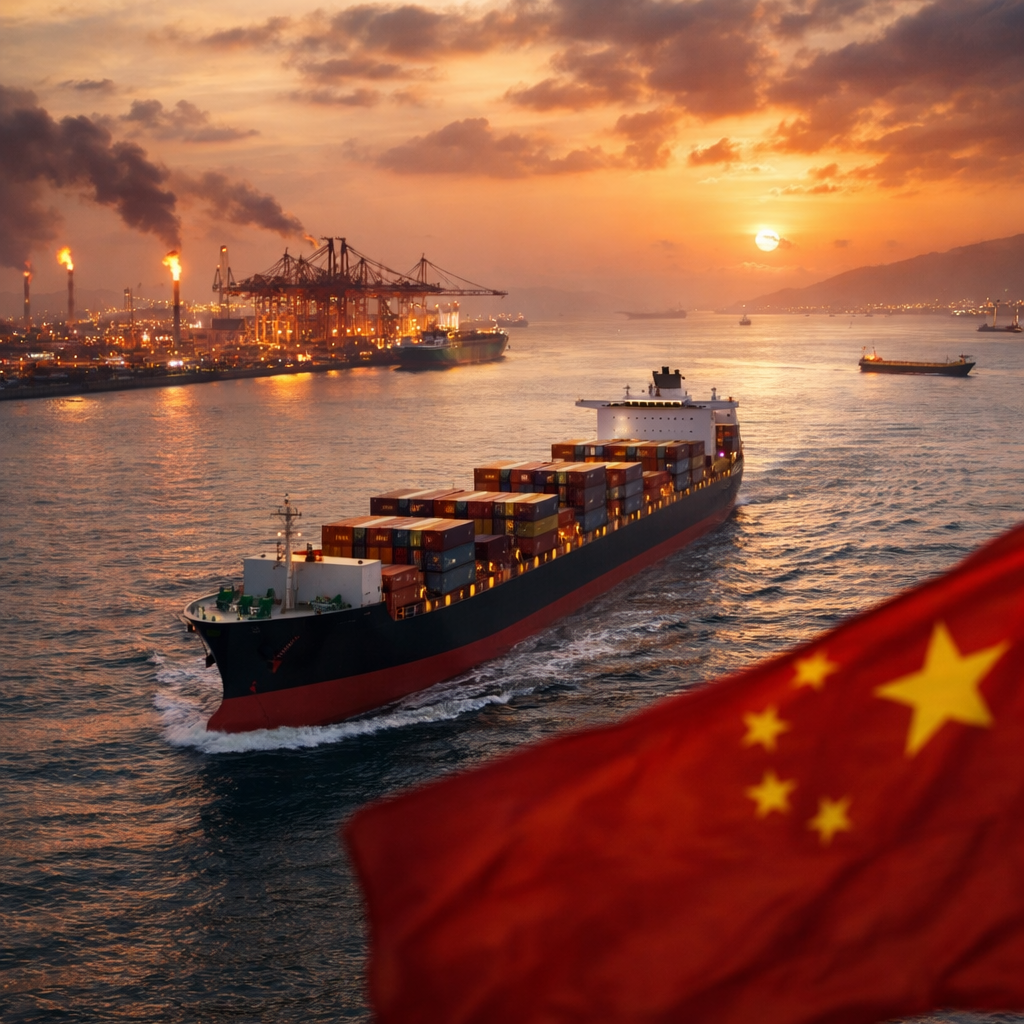
Rising tensions in West Asia involving the United States, Israel and Iran are drawing close attention from global trade and financial markets, particularly due to the potential impact on energy supplies from the Gulf. Analysts say the evolving conflict could carry significant implications for China, whose industrial economy depends heavily on stable oil imports from the region.
China currently imports close to 70% of its crude oil consumption, making the Gulf a critical energy source for its manufacturing-driven economy. Data from the International Energy Agency (IEA) shows that China remains the world’s largest crude oil importer, with a substantial share of shipments originating from Middle Eastern producers.
“China continues to be the main driver of global oil import demand,” the IEA said in its recent oil market assessment, highlighting how the country’s economic activity remains closely linked to stable energy supplies.
Energy Routes Under Scrutiny
A major concern for policymakers and traders is the security of shipping through the Strait of Hormuz, a narrow passage connecting the Gulf to international markets. According to the U.S. Energy Information Administration (EIA), roughly 20 million barrels of oil per day pass through the waterway, making it one of the most important energy transit routes in the world.
Any disruption in this corridor could quickly push up global oil prices and affect freight costs, insurance premiums and supply chains across multiple sectors.
Pressure on Manufacturing and Trade
China’s export sector relies heavily on consistent access to affordable energy. Industry analysts say a prolonged disruption in Gulf oil flows could increase production costs for Chinese manufacturers and potentially affect global supply chains.
For China — the world’s largest crude oil importer — such disruptions could have cascading effects on manufacturing supply chains, export competitiveness and domestic economic growth.
Economic indicators already suggest a more cautious outlook in Beijing. The Chinese government has set its 2026 growth target at around 4.5–5%, one of the lowest ranges in decades, reflecting concerns about slowing global demand, trade tensions and geopolitical risks.
Economists at the World Bank have also warned that geopolitical instability in major energy-producing regions can amplify price volatility and place pressure on energy-importing economies.
“Heightened geopolitical tensions tend to increase commodity price volatility and create uncertainty for global growth,” the World Bank noted in a recent economic outlook.
Strategic and Trade Considerations
Beyond energy, China has growing economic interests across West Asia through infrastructure and logistics investments connected to the Belt and Road Initiative.
The region is also an important trading partner for Beijing. Countries such as Saudi Arabia and the United Arab Emirates have emerged as key suppliers of energy and participants in China’s expanding trade networks.
Market Outlook
Financial institutions and commodity traders are monitoring the situation closely as any escalation could influence oil prices, trade flows and shipping costs.
Analysts cited by Bloomberg note that geopolitical risk premiums could rise in global energy markets if tensions continue to escalate.
For global trade and finance sectors, the trajectory of the conflict will remain an important factor shaping energy prices, supply chains and economic sentiment in the months ahead.