
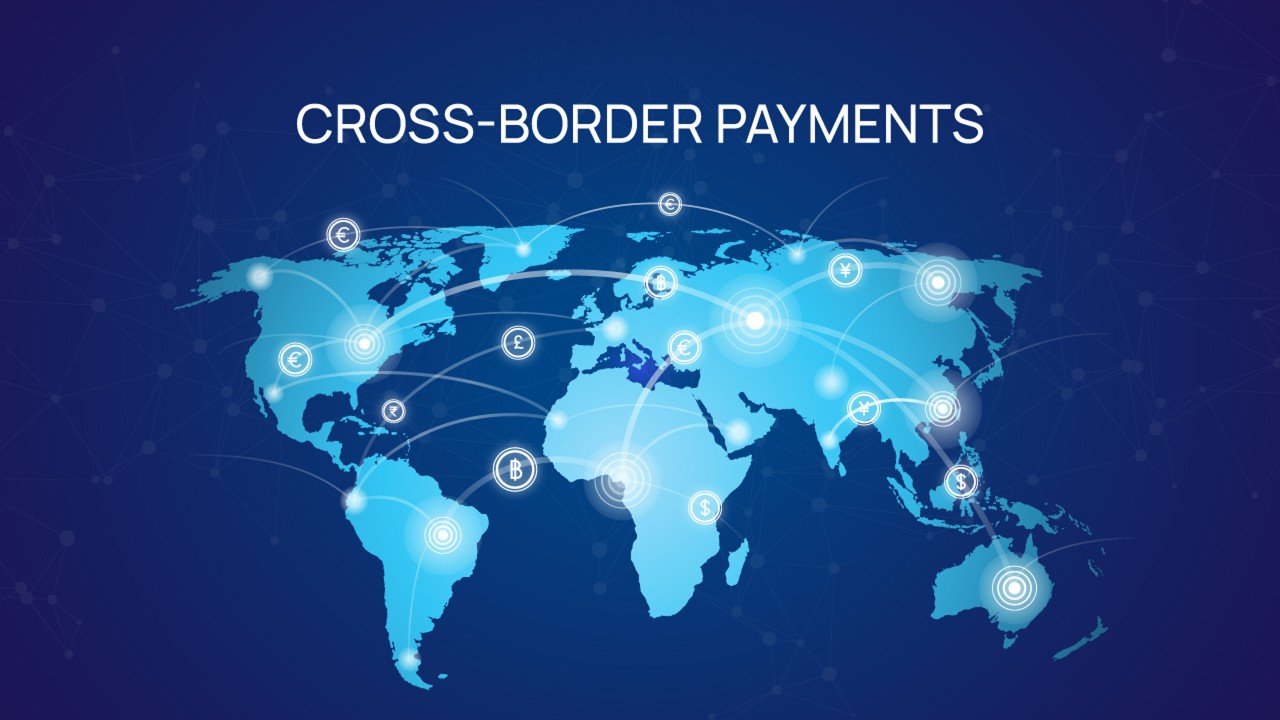
Cross-border payments have entered what can only be described as a connectivity phase, and that shift has picked up pace over the past week. Banks, fintech firms and payment networks are leaning more heavily into partnerships across key global corridors. This is not just another round of incremental improvement. It reflects a deeper redesign of how money actually moves across borders, especially in trade-linked flows where speed and visibility are no longer optional.
This isn’t about building the next global network. Increasingly, it’s about being in the right networks.
From Owning Rails to Controlling Access
For a long time, cross-border payments were built around ownership. Banks invested in correspondent networks. Payment providers expanded market by market. Scale came from how much infrastructure you controlled.
That logic is starting to break down.
Over the past week, the direction has become clearer. Instead of building new rails, institutions are choosing to connect to existing ones. Behind the scenes, several banks are shifting investment toward integration layers, focusing more on API-driven connectivity than on expanding their own networks.
On the fintech side, players like Wise Platform and Thunes are continuing to expand their integrations across Europe, Asia and the Middle East. What they are offering banks is not infrastructure ownership, but access. And that distinction matters more than it used to.
This is only one part of the picture.
On the network side, Visa B2B Connect and Mastercard Cross-Border Services are increasingly being used as access rails, giving institutions a way to move beyond traditional correspondent banking dependencies. Even SWIFT is evolving. Its gpi initiative has been steadily improving speed and transparency, but more importantly, it is moving toward a more connected model.
Then there are alternative approaches. Ripple’s network, while still selective in its adoption, continues to find relevance in corridors where liquidity constraints make traditional models inefficient.
Put simply, scale is no longer something institutions build from scratch. It is something they access.
And the institutions that come out ahead are unlikely to be the ones that own the rails. They will be the ones that know how to connect them.
Recent Activity Points to Corridor Expansion and Real-Time Pressure
Over the past week, much of the activity has been centred on expanding coverage across Asia–Middle East and Africa-linked corridors. These are not new markets, but they are becoming more important as trade flows increase and expectations around settlement tighten.
Take corridors like UAE–India. The volume is there, but so is the pressure to move faster. Payments that once took days are now expected to settle within hours, if not sooner.
That is starting to change behaviour.
Payment providers are integrating more closely with local clearing systems. Fintech firms are positioning themselves as connectors between otherwise fragmented networks. The result is not one unified system, but something more layered and interconnected.
And this is where the shift becomes harder to ignore.
This is no longer just about improving efficiency. It is about staying relevant. Institutions that cannot plug into these emerging flows will find themselves increasingly on the outside of cross-border trade activity.
Inside banks, this is already showing up in strategy discussions. Roadmaps that once focused on network expansion are now being reworked around partnerships and ecosystem access. Ownership is becoming less important than orchestration.
In trade finance, the impact is even more direct. Payment delays affect liquidity. Liquidity affects trade. As trade cycles shorten, payment infrastructure is being forced to catch up.
The pattern is still forming, but it is becoming difficult to miss.
Trade Digitisation Is Pulling Payments Into a Single Flow
At the same time, payments are not evolving in isolation. They are being pulled into a broader shift toward digital trade.
Initiatives like Singapore’s TradeTrust are pushing interoperability in trade documentation, making it easier for digital records to move across platforms and jurisdictions. The Digital Container Shipping Association is working on standardising electronic bills of lading, which could significantly reduce reliance on paper.
These changes matter because they bring payments closer to the trade itself.
Payments are no longer separate events that happen after documents move. As documentation becomes digital and verifiable in real time, payments are starting to move alongside goods, not behind them.
There is still a long way to go. Around 80% of global trade documentation remains paper-based, and the trade finance gap continues to sit above $2.5 trillion. But the direction is clear.
Regulation is beginning to support this shift. Frameworks like the UNCITRAL Model Law on Electronic Transferable Records are giving legal recognition to digital documents, which is a necessary step if trade and payments are going to integrate more closely.
For banks, this changes where advantage comes from. It is less about owning infrastructure and more about being able to connect across multiple systems in a way that feels seamless to clients.
For fintech firms, it reinforces their role as connectors. They are not replacing banks. They are making the system work together.
For global trade, the effect is gradual but meaningful. Faster payments improve liquidity. Better liquidity supports trade. And as systems become more connected, access to international markets becomes easier, especially in fragmented regions.
There is, however, a trade-off that is only starting to be discussed. Connectivity reduces friction, but it can also shift control. As more institutions rely on shared networks and external infrastructure, influence may begin to concentrate in fewer hands, particularly in high-volume corridors.
That part of the story is still unfolding.
What is already clear is this: the shift is no longer theoretical. It is happening in real time. And the question is changing.
It is no longer about who owns the network.
It is about who controls the connections when networks converge.
Category: Payments & Cross-Border