
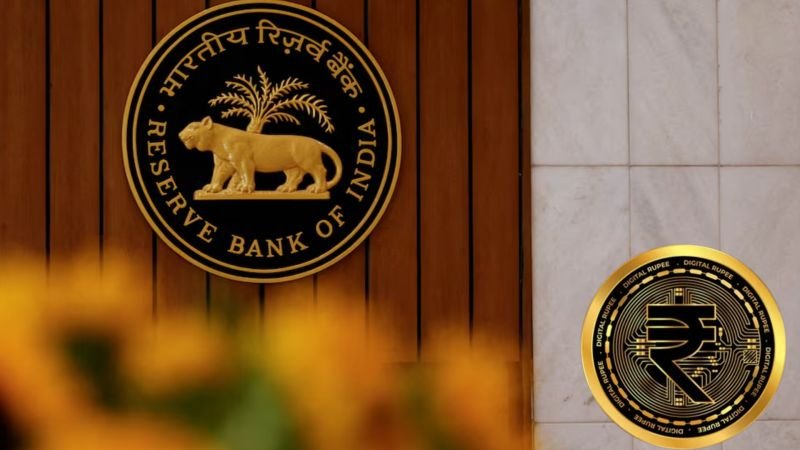
India’s central bank is stepping up its push to embed the digital rupee into the country’s financial infrastructure, with plans to expand its use in government welfare disbursements and test its application in cross-border settlements.
The Reserve Bank of India outlined the strategy in its 2025–26 annual report, published Friday, pointing to pilot programmes already underway across several states and union territories including Gujarat, Puducherry and Chandigarh, where food subsidy payments were routed through the central bank digital currency (CBDC).
“Multiple government agencies commenced pilots in various direct benefit transfer schemes leveraging the programmability feature of CBDC to ensure productive utilisation of public funds,” the RBI said.
The announcement comes against a more complicated backdrop for the retail e-rupee. Circulation fell to ₹7.71 billion as of March 31, 2026, down from ₹10.16 billion a year earlier — a decline the central bank has yet to publicly address.
On the international front, the RBI has signed a digital assets agreement with the Monetary Authority of Singapore and is in discussions with Singapore and the UAE on cross-border CBDC pilots. The bank is also participating in multilateral frameworks led by the Bank for International Settlements.
Separately, the RBI confirmed its dedicated cloud platform for financial institutions entered beta operation with nine participants — a move that places it among the first central banks globally to offer such infrastructure. The Indian Financial Sector (IFS) cloud is currently in Phase I, with more advanced services planned for a subsequent phase.