

Transaction banking in Egypt is no longer about execution alone. Clients want visibility, speed, and a banking partner that actually thinks ahead with them.
For a long time, transaction banking was the part of the bank nobody talked about much. It worked, it scaled, and as long as things moved smoothly, it stayed out of the conversation. That’s changed.
Corporate clients across Egypt and the wider region are coming to their banking relationships with far sharper expectations now. They want speed. They want visibility into what’s actually happening. And they want a bank that thinks alongside them, not one that simply processes instructions and moves on.
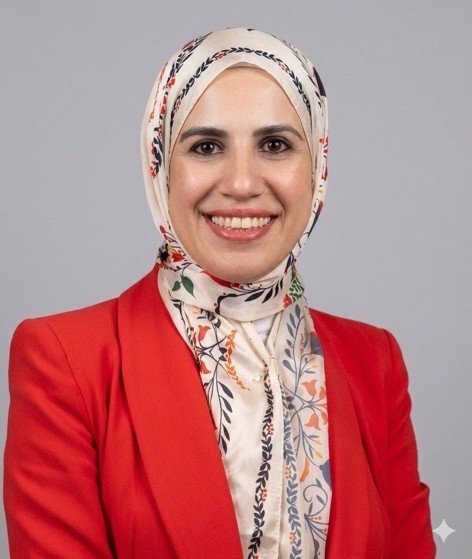
In this conversation with Digital Trade Outlook, Sarah Salah, Head of Global Transaction Banking, talks about where client expectations are heading, how geopolitical pressure is reshaping trade priorities, and why the next 12 to 24 months will matter more than most.
Digital Trade Outlook-How are client expectations across trade finance and transaction banking evolving in Egypt’s corporate banking landscape today?
Sarah Salah, Head of Global Transaction Banking :The shift over the past few years has been significant. Corporates are no longer walking into banking relationships looking for standard support. They want faster execution, real visibility, and engagement that actually feels advisory. The transactional relationship isn’t enough anymore.
There is also a much stronger pull toward integration. Managing trade finance in one place, cash management somewhere else, payments through yet another channel — clients are done with that fragmentation. They want it connected, working as one thing rather than several moving parts they have to stitch together themselves.
In Egypt specifically, liquidity management has become a genuine priority. Businesses are watching closely which banking partners can hold steady with them when market conditions shift. That consistency matters more than it used to.
2. What key trends are you currently seeing across cross-border payments, trade digitisation, and treasury management services?
Digital transformation keeps coming up because it is genuinely touching everything right now. Corporates want their banking platforms talking to their internal systems. They want fewer manual steps, cleaner workflows, less friction across the board. The appetite for automation is real and growing.
In cross-border payments, client expectations have moved considerably. Speed and transparency are no longer differentiators. They are the baseline. Clients want to know where a payment is and when it is landing, without having to chase anyone for an update.
Treasury tells a similar story. Cash visibility, liquidity optimisation, cash flow forecasting — these have all moved higher up the agenda, particularly as businesses become more deliberate about how they manage their positions in an uncertain environment.
Trade digitisation is also progressing, particularly around workflow automation and document handling. But the market still has considerable ground to cover, and that gap is worth paying attention to.
3. How are ongoing geopolitical developments in the Middle East influencing corporate trade activity and transaction banking priorities across the region?
The impact has been real and it is showing up directly in how businesses plan. Supply chains have been disrupted. Trade routes have shifted. Companies are far less comfortable assuming stability than they were a few years ago.
The response from corporates has been practical. More contingency planning, more serious work on diversifying supplier networks, and a stronger focus on maintaining liquidity buffers so there is room to absorb shocks when they arrive.
For transaction banking, this has raised the stakes considerably. Clients need more than someone who can execute. They need a bank that reads the environment, helps them structure things intelligently, and keeps cross-border activity moving even when conditions get difficult. That is a fundamentally different kind of relationship from what many were used to.
4. What are some of the biggest operational or liquidity challenges corporates continue to face in cross-border trade, and how are Egyptian banks helping clients navigate them?
The challenges have not gone away. Shipment delays, documentation complexity, supply chain disruptions, pricing volatility in global markets — these remain very present for businesses operating across borders. For companies that are heavily import-dependent, the foreign currency dimension adds another layer of pressure that does not ease quickly.
Egyptian banks have been responding through tailored trade finance structures, working capital support, stronger digital capabilities, and more engaged advisory conversations. There has also been a genuine effort to improve turnaround times and reduce the friction that makes these processes harder than they need to be. Clients notice when that effort is real.
5. How do you see technologies such as automation, APIs, and AI improving operational efficiency and client servicing within transaction banking over the next few years?
Technology is already making a practical difference and the direction is clear. Automation is cutting down the manual processing that used to slow everything, and that is not a small thing. It changes turnaround times, it changes accuracy, and it frees up capacity for work that genuinely requires human judgment.
APIs are opening up something meaningful too. When clients can access information, run reports and initiate transactions directly through their own systems, the nature of the banking relationship changes. It becomes less about clients coming to the bank and more about the bank fitting into how clients already operate.
AI carries strong potential across transaction monitoring, document checking, fraud detection and client servicing. But relationship management and human expertise will always sit at the centre of this. Technology makes both sharper. It does not replace either.
6. Looking ahead, what are the key priorities for transaction banking businesses over the next 12 to 24 months?
Digital transformation, operational efficiency and client experience will stay at the top of the agenda. Banks will continue investing in automation, trade digitisation and solutions that work together as a connected whole rather than sitting in separate silos. That integration piece is increasingly non-negotiable.
But the part that will define who earns lasting client trust is the advisory and liquidity side. Corporates are navigating environments that are genuinely complex and shifting quickly. The banks that stand out will not simply be the ones with the most capable platform. They will be the ones that show up as real partners, who understand the pressure their clients are under and help them think through it. That is what this moment is asking for.