
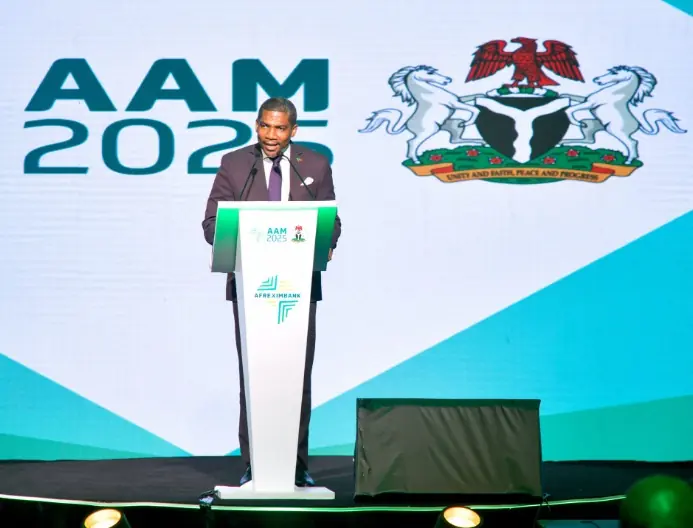
St Kitts and Nevis, April 2026 — African Export-Import Bank has signed an agreement with the Government of St Kitts and Nevis to host the fifth edition of the AfriCaribbean Trade and Investment Forum, scheduled to take place from July 29 to 31, 2026.
The forum will bring together policymakers, financial institutions, development agencies and private sector participants with a focus on strengthening commercial and investment ties between Africa and the Caribbean. The initiative is part of a broader effort to translate political engagement between the two regions into tangible trade and capital flows.
ACTIF has increasingly evolved into a platform aimed at facilitating transactions rather than dialogue alone. The 2025 edition resulted in five deals valued at over 291 million dollars across multiple Caribbean markets, covering areas such as project financing, trade facilitation and private sector investment.
Afreximbank has also expanded its presence in the Caribbean through its Barbados office, approving more than 700 million dollars in financing across CARICOM countries. These include programmes linked to trade finance, infrastructure development and support for small and medium enterprises.
The upcoming forum is expected to build on this momentum by identifying new opportunities for cross regional collaboration, particularly in sectors such as logistics, tourism, energy and financial services. The focus remains on creating structured pathways for investment and enabling institutions to participate more actively in cross border trade between the two regions.
Digital Trade Outlook Analysis
The growing engagement between Africa and the Caribbean points to a gradual shift toward building trade corridors outside traditional routes. For transaction banks, the opportunity lies in enabling flows where infrastructure is still developing. This includes structuring trade finance, managing cross border liquidity and supporting payment connectivity across fragmented markets.
Digital Trade Outlook Perspective
What stands out here is not the forum itself, but the consistency of capital deployment behind it. For years, Africa Caribbean trade was discussed more as a strategic idea than a functioning corridor. That gap is starting to close. When institutions begin committing capital at scale, the conversation changes from potential to execution.
This creates a different kind of opportunity for banks. These are not mature trade routes with established systems and predictable volumes. They are still being built. That means higher complexity, but also more control for those who enter early. Banks that can navigate regulatory fragmentation, support financing structures and enable cross border payments in these environments will play a defining role in how these corridors develop.
The shift is gradual, but it is meaningful. Trade is becoming less concentrated and more distributed across emerging markets. What is happening between Africa and the Caribbean is part of that broader transition.
Source: Afreximbank