
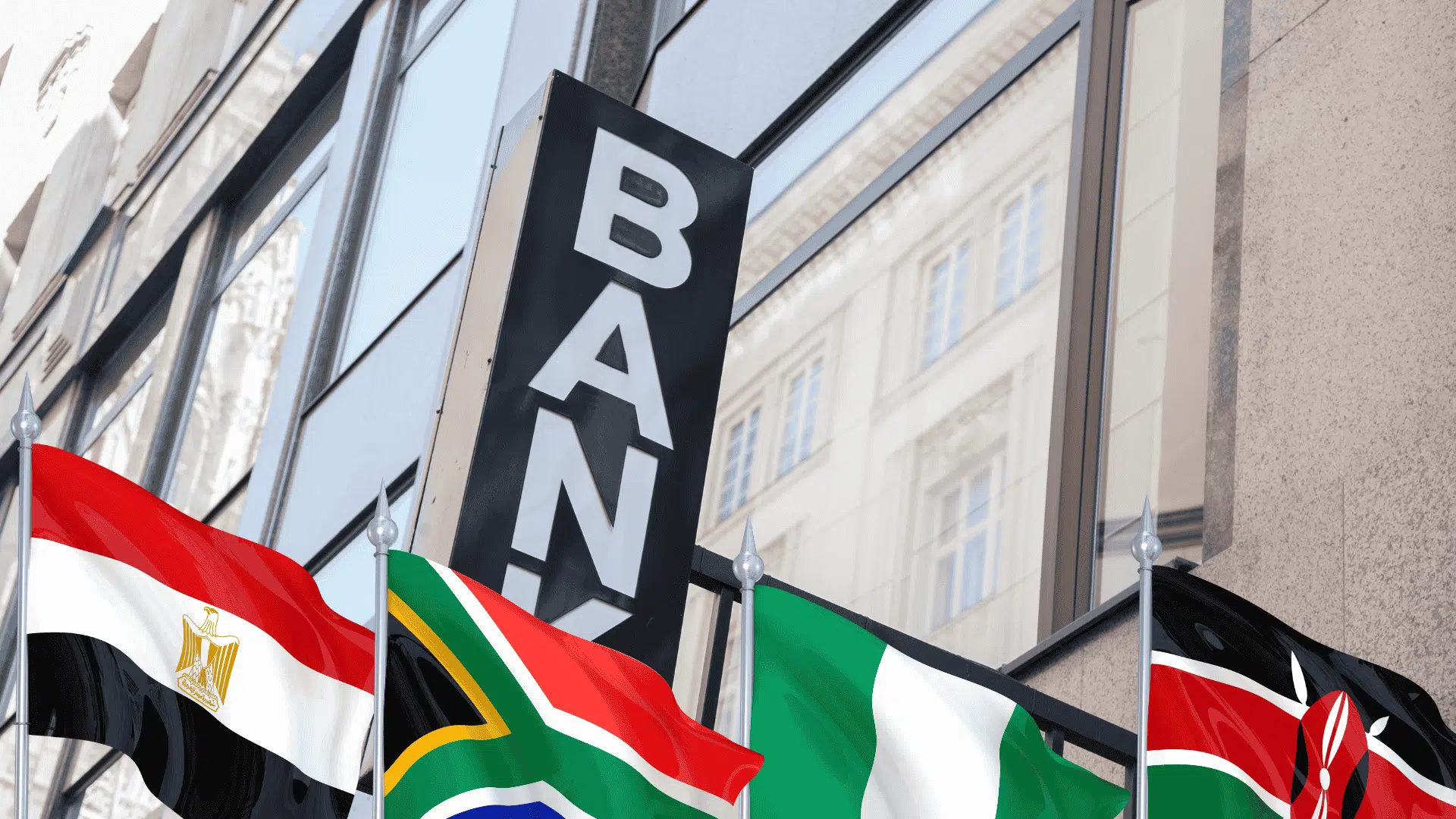
Africa is moving closer to the centre of global trade finance, as regional banks step in to fill a widening gap left by international lenders pulling back.
Across several African markets, stricter capital rules, rising compliance costs, and shifting risk priorities have led European and global banks to scale down correspondent banking and trade-related exposure, according to industry and multilateral assessments. In their place, regional lenders are steadily increasing their presence, backed by stronger balance sheets and a more targeted focus on cross-border flows.
The scale of the opportunity is clear. Africa’s trade finance gap—estimated at $100–120 billion annually by the African Export-Import Bank—continues to limit business activity, particularly for small and medium-sized firms. At the same time, the continent still accounts for less than 3% of global trade.
Regional lenders expand as global banks pull back
Standard Bank Group is among those accelerating its push. In a March 2026 strategy update, the bank outlined plans to deepen its focus on trade, infrastructure, and energy financing, with additional capital directed toward East and West Africa as well as Egypt.
The bank is targeting a rise in the contribution of its operations outside South Africa to roughly 45% of group earnings by 2028, linking its growth outlook to expanding intra-African trade, energy investment, and industrial development.
Momentum is already visible in trade-related revenues, supported by digital platforms and increasing demand for structured solutions across sectors.
Standard Bank is not alone. Regional lenders and development finance institutions are expanding liquidity, guarantees, and risk-sharing capacity across key markets. The African Export-Import Bank, in particular, has continued to highlight access to financing as one of the most persistent constraints on trade across the continent.
Key markets anchor emerging trade corridors
A group of large and strategically positioned economies is driving the expansion of regional trade flows.
Nigeria remains West Africa’s largest market, with strong demand for financing across oil, gas, and increasingly diversified export sectors. Banks such as Access Bank are playing a growing role in facilitating cross-border activity within the ECOWAS region.
Egypt is positioning itself as a gateway linking Africa with the Middle East and Europe, supported by infrastructure investment and its logistics advantage.
In East Africa, Kenya continues to act as a regional hub, benefiting from its transport networks and growing integration of digital financial services. Ghana is also strengthening its position within West Africa, supported by relative political stability and commodity exports.
South Africa, despite domestic challenges, remains the continent’s most developed financial market and continues to play a central role in structuring and supporting trade across the region.
Capital flows and geopolitics reshape the landscape
Shifts in global capital are reinforcing this transition.
China remains a major player through infrastructure financing linked to its Belt and Road Initiative, with investments focused on transport, mining, and energy. These flows are closely tied to supply chain strategies around critical minerals and industrial inputs.
At the same time, Gulf investors are increasing their presence. Sovereign wealth funds and private capital from the UAE and Saudi Arabia are targeting ports, logistics, agriculture, and renewable energy.
Institutions such as Abu Dhabi Investment Authority and Saudi Arabia’s Public Investment Fund are expanding their footprint in sectors directly linked to trade flows, helping to shape new commercial corridors.
Structural drivers support long-term growth
The rollout of the African Continental Free Trade Area (AfCFTA) is expected to accelerate intra-African trade by reducing barriers across 54 countries. The World Bank estimates the agreement could lift intra-African trade by more than 50% by 2035 if fully implemented.
At the same time, investment in critical minerals, energy transition projects, and infrastructure is creating new financing demand. Digital platforms and payment systems are also improving transaction efficiency across key routes.
Risks remain
The outlook is not without challenges.
Currency volatility continues to affect markets such as Nigeria and Ghana, raising the cost and complexity of cross-border transactions. Regulatory fragmentation and political uncertainty in some regions add further friction.
Access to financing also remains uneven. Smaller firms, in particular, continue to face high rejection rates, a constraint repeatedly highlighted by institutions such as the International Finance Corporation.
A shift in the centre of trade finance
The broader direction, however, is becoming difficult to ignore.
Africa is emerging as a growth region for trade finance, supported by regional banks, development finance institutions, and new capital flows from Asia and the Gulf.
For corporates, the implications are practical. Accessing these opportunities will depend less on global banking relationships and more on local partnerships, currency management, and alignment with evolving regional trade corridors.