

Transaction banking doesn’t sit quietly in the background anymore.
For years, it was treated as plumbing. It worked, it scaled, and unless something broke, it rarely became the focus of strategic discussion. That comfort is gone. Today, the pressure is visible and constant. Payments are expected to move instantly, trade cycles are tightening, and clients are far less patient with delays or fragmented processes.
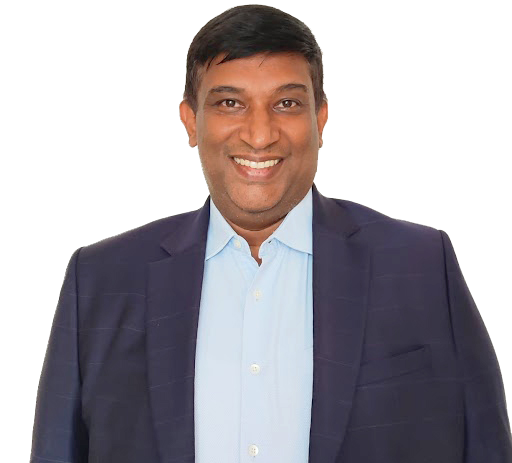
In this conversation with Digital Trade Outlook, Ramanan S V, Chief Executive Officer, India and South Asia at Intellect Design Arena, speaks about how this pressure is showing up inside banks and why it is forcing a rethink of how transaction banking is structured.
What is becoming clear is that this is not just another round of system upgrades. Banks are being pushed to move away from thinking in products. Payments, liquidity and trade finance can no longer operate as separate tracks. They need to come together as part of a single, connected flow that works in real time and holds up under growing complexity.
Digital Trade Outlook-How are you seeing banks approach payments and trade transformation right now, especially with platform-led models like Intellect’s gaining traction?
Ramanan S V, Chief Executive Officer, India and South Asia at Intellect Design Arena: Transaction banking is at a decisive inflexion point. For years, it operated as a stable, utility-led function in the background. That has changed. Today, it sits much closer to revenue, client retention and competitive positioning. Most banks are no longer asking whether to transform. The focus now is on how quickly they can move and what kind of architecture they can realistically execute.
The shift is coming directly from client pressure. Corporate treasurers expect payments, liquidity and trade processes to move together, with speed and visibility built in. Inside many banks, however, these still sit across separate systems and teams, designed for a different era. Bridging that gap is where most of the complexity lies. At the same time, ISO 20022 migration, the expansion of real-time payment rails across regions, and rising client expectations are adding to the urgency.
This is why platform-led models are gaining ground. Banks are recognising that upgrading systems in isolation does not solve the coordination problem. The focus is moving to how capabilities come together across the transaction lifecycle. Payments and trade can no longer operate as separate tracks.
In practice, this is pushing banks toward more composable approaches. Composable and intelligent open finance platform eMACH.ai allows targeted upgrades, whether in trade processing or cross-border payments, without forcing a full rebuild. That makes transformation more continuous, with quicker outcomes and lower execution risk.
A lot of banks are still dealing with legacy systems. How are they balancing that with the push for real-time and cross-border capabilities?
Legacy is not the constraint. The real issue is the absence of a clear evolution strategy.
The banks moving ahead have stopped trying to replace their core. They treat it as a stable system of record and build around it.
This is not a big-bang transformation. It is gradual. New layers are introduced, flows are shifted over time, and risk is contained. No single cutover, no disruption to the core.
The reality, though, is constrained. A large share of technology spend still goes into maintaining what already exists. Add years of accumulated complexity across systems, vendors and integrations, and even small changes become slow and expensive.
So banks are starting with integration. API layers, event-driven middleware and translation capabilities are becoming the backbone. They allow legacy systems to work with ISO 20022 and API ecosystems without forcing a rebuild.
In cross-border, the pattern is clear. Progress is not coming from rebuilding correspondent banking. It is coming from connecting into networks that already exist, SWIFT gpi, regional clearing systems and corridor-specific platforms.
What separates the leaders is focus. They are not trying to fix everything. They are prioritising payments and trade, where the impact is immediate and visible.
This is where the real shift sits. Architectural discipline.
The banks that are moving well have simplified how their operating model works. They have cut duplication, focused investment, and aligned around high-impact flows.
That clarity is what drives speed. Not transformation at scale, but targeted change that delivers without destabilising the core.
Where do you see AI actually making a difference today in transaction banking, and where is it still more hype than reality?
AI is making a real difference in transaction banking when it improves decision-making within workflows, not when it is limited to task automation.
Today, I see three areas where the impact is already clear and measurable.
The first is document intelligence in trade finance. AI is moving beyond automation into contextual decision-making. Instead of simply extracting data, it can read across documents like bills of lading and letters of credit, validate information and flag inconsistencies in real time. Our Open Business Impact AI platform, Purple Fabric, is enabling this by embedding intelligence directly into transaction flows. In trade, through solutions such as PF Trade, this is already reducing turnaround times from days to hours while improving accuracy and consistency.
The second is fraud detection and sanctions screening. AI improves precision compared to rule-based systems, reducing false positives while surfacing more meaningful risks. That allows teams to focus on what actually requires attention.
The third is liquidity forecasting. For corporates operating across multiple entities and markets, AI models trained on transaction behaviour tend to outperform static cash flow models. They provide a more dynamic and realistic view of liquidity, particularly in more complex environments.
Where I think the narrative still runs ahead of reality is in fully autonomous decision-making. The idea that AI can independently manage complex trade advisory or end-to-end credit decisions without human oversight is not practical today. Regulatory expectations, accountability and the need for explainability still require a human layer.
The more effective approach is what I would describe as Business Impact AI, where intelligence is built directly into the transaction lifecycle to drive measurable outcomes across decisioning, risk, and client servicing. In models like PF Trade, AI supports contextual, explainable and real-time decisions as part of the flow. It works best as an amplifier of human judgement, not a replacement.
Trade finance digitisation has been talked about for years. What is really changing now, especially across emerging markets?
Trade finance digitisation has been talked about for years. What feels different now, especially in emerging markets, is that it’s no longer incremental. It’s starting to take shape in a more structural way.
One clear shift is on the regulatory side. Frameworks like MLETR are beginning to get adopted across key markets, and that finally gives legal backing to electronic trade documents. Without that, most digital initiatives don’t move beyond limited use. Now, there is a pathway for them to scale.
Access has also improved in a way that’s easy to underestimate. With deeper mobile and digital penetration, even smaller exporters are now part of the ecosystem. That is pushing banks to think differently, closer to where trade actually begins, not just within their own systems.
You can also see more coordination across regions. Trade corridor platforms are emerging across Asia, the Middle East and Africa, creating shared standards and a level of trust that reduces the need for one-off integrations every time.
But the bigger change, from what I’ve seen, is in how banks are approaching the problem itself.
Trade is moving from digitisation to something more operational.
Earlier, the focus was on converting paper into digital formats. That helped, but it didn’t really change how the process worked. Now, banks are starting to rethink the flow end to end. More connected, more event-driven, and built to handle scale across markets.
That shift is also changing how teams think internally. There is more effort going into simplifying workflows, stripping them back to what actually matters, and rebuilding them in a way that is consistent and scalable.
Trade finance is gradually moving away from being document-heavy toward something more execution-led.
Workflows are more connected. Decisions are happening within the process. Transactions are starting to move faster and with more clarity.
That is where the real change is happening, and that is what is beginning to unlock scale in a more meaningful way.
Looking ahead, where do you see the biggest opportunity across payments and trade infrastructure?
The biggest opportunity, in my view, is the convergence of payments, trade and cash management into a single, more intelligent transaction banking layer.
Today, these still operate in silos. But from a client’s perspective, it is one continuous flow, where a trade event triggers a payment, which then impacts liquidity. Banks that can bring this together end to end will move beyond processing transactions to becoming more relevant to how clients actually run their business.
A second opportunity is the shift toward event-driven, real-time infrastructure. We are starting to see models where trade milestones can automatically trigger payments, financing or risk actions. That improves speed, transparency and the overall client experience in a very practical way.
The third is how AI is applied within workflows. The real differentiation will come from intelligence embedded into areas like compliance, risk, decisioning and client servicing, rather than from standalone tools. When AI is part of the flow, it starts to influence decisions as they happen.
This is where more integrated platforms are starting to matter. In trade, capabilities like PF Trade are helping connect events across the trade lifecycle with payments and liquidity, creating a more unified and responsive flow.
At the same time, the largest opportunity, both in scale and impact, remains closing the trade finance gap, which is still concentrated among SMEs in emerging markets. Banks that can extend trade and credit access through digital platforms, ecosystem partnerships and better risk models will unlock meaningful growth while also supporting real economic activity.
This is also where platforms like eMACH.ai and Purple Fabric, built on Design Thinking and First Principles Thinking, come into play, bringing together AI-driven decisioning, event-led orchestration and embedded compliance within a single operating layer. That combination allows banks to move beyond isolated digitisation efforts toward more scalable and connected transaction banking models.
The conversation continues
Join the discussion on LinkedIn
Digital Trade Outlook shared this interview on LinkedIn. Read what peers are saying and add your view.
On LinkedIn, as of 13 October 2026